search
search

Langtang Gosainkunda Biodiversity Trek

globe_location_pin

Country

Nepal

calendar_clock

Duration

21 days Days

avg_pace

Difficulty

Moderate
partly_cloudy_day

Best Season

Mar, Apr, May, Sept, Oct, Nov

conversion_path

Start / End Point

Kathmandu / Kathmandu

landscape_2

Max. Altitude

4,984m (Tserko Ri)

landscape

Nature Of Trek

Lodge to lodge trekking

footprint

Activity

Trekking

location_on

Region

Langtang Region

groups

Group Size

2 - 16

hiking

Activity Per Day

5–6 hours walking + wildlife activities in Chitwan

home

Accommodation

Hotel+Teahouse/lodge
flatware

Meals Included

Breakfast, Lunch, Dinner
editor_choice

Recommended For

Fit trekkers, high-altitude trekkers, and flora and fauna lovers

Langtang Gosainkunda Biodiversity Trek Highlights

  • Walk through a full range of plant zones, from subtropical Sal tree forests to temperate Oak and Maple, up to alpine Rhododendron and Larch
  • Pass the ancient glacial moraines in Langtang Valley, formed after the last ice age
  • Visit high-altitude wetlands near Gosaikunda, where rare alpine plants like Saussurea gossypiphora (snow lotus) grow
  • Observe red panda habitats in Langtang, where dense bamboo provides both food and shelter within a 2–3 km territory range
  • Interact with the Tamang people in the mountains and the Tharu community in the plains
  • Hike to Tserko Ri Summit (4,984m) and enjoy Himalayan views of Langtang Lirung, Yala Peak, and Kimshung massifs
  • Visit the local Yak Cheese Factory in Sing Gompa
  • Visit the Oxbow Lakes in Chitwan, formed by changing river paths, where amphibians and birds breed

Langtang Gosainkunda Biodiversity Trek Overview

Choosing between the peaks of the Himalayas and the green jungles of the Terai can feel like an impossible compromise for a single trip. As a result, many travelers visit only one type of climate zone and miss out on the full ecological diversity of Nepal.

The Langtang Gosaikunda Biodiversity Trek with Chitwan National Park Tour is a 21-day expedition designed to solve this misconception by connecting the gap between high-altitude alpine zones and subtropical riverine forests. This tour focuses on a main flora and fauna exploration, taking you from the home of the Red Panda at 3,000m to the territory of the One-horned Rhinoceros in the lowlands.

At first, this trek follows Langtang Valley routes, crosses Lauribina, and reaches Gosaikunda Lake at the top. You’ll explore Tamang and Sherpa villages, open yak pastures, and Himalayan views that include peaks like Langtang Lirung (7,227m), Dorje Lakpa (6,966m), and Yala Peak (5,520m), all without long flight risks. As you gain altitude, vegetation shifts from subtropical forests to alpine shrubs and cushion plants, where only hardy species survive due to low oxygen and extreme cold.

You then move from Langtang National Park down to Chitwan National Park, covering two very different ecosystems. Langtang protects red panda, Himalayan black bear, and alpine forests, while Chitwan holds mugger crocodiles, Asian elephants, Bengal tigers, and over 500 bird species.

This journey shows seasonal plant cycles, bird migration patterns, animal tracking signs such as footprints, droppings, scratch marks, and provides a good practical learning experience for people interested in nature and wildlife.

If you want to research or explore wildlife, mountains, and culture in one journey, this trek is a direct choice. It is also the perfect trip for wildlife enthusiasts, nature lovers, botany and plant enthusiasts, birdwatchers, Nepal’s National Park explorers and photographers. Plan it, walk it, and discover the difference between the Himalayas and the jungle all in a single trip with us.

Langtang Gosainkunda Biodiversity Trek Detailed Itinerary 

Day 1 :

Arrive at Kathmandu (1,324m) and transfer to your Hotel

road

Drive Distance

5.8km

departure_board

Drive Duration

25-30 minutes

home_pin

Place

Kathmandu

After landing at Tribhuvan International Airport, you’ll head to the immigration hall. If you haven’t secured a visa beforehand, you can use the kiosks to fill out your Visa on Arrival form, pay the required fee (USD is the easiest), and receive your entry stamp.

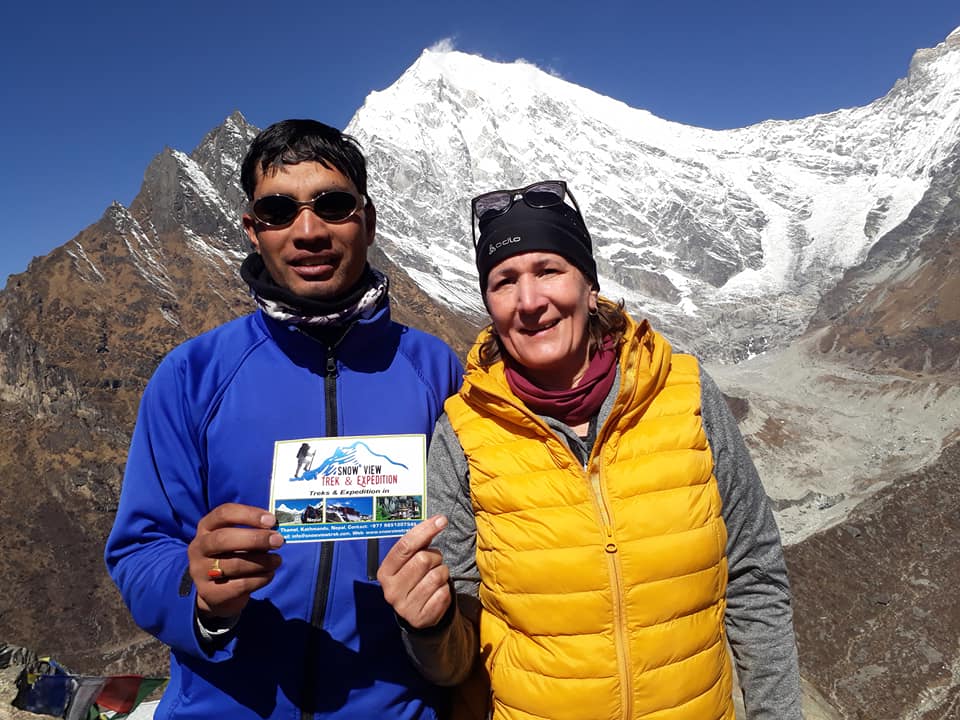
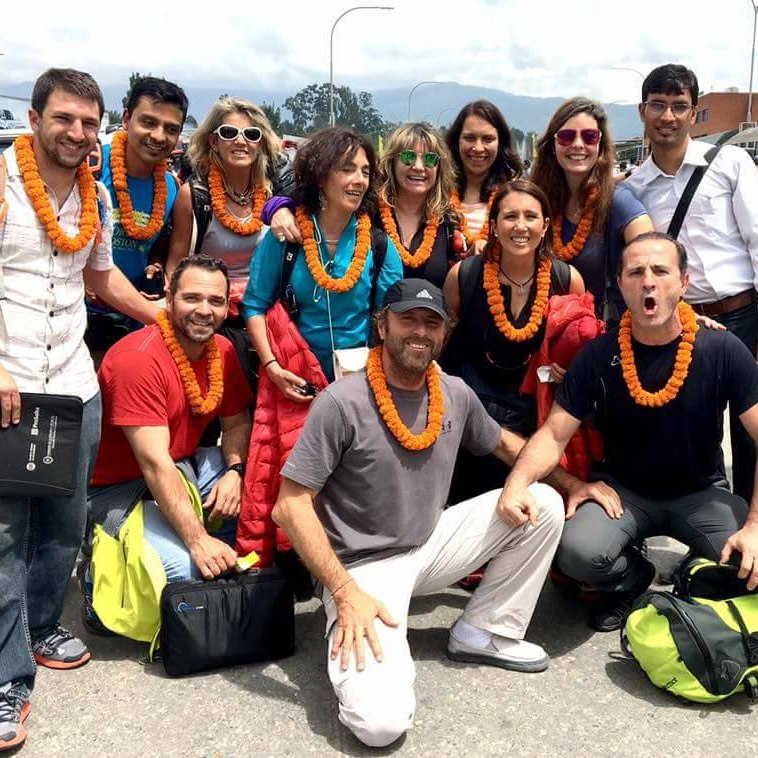
Just outside, a crowd awaits arriving travelers, and this is where you’ll look for your guide holding a sign with your name or our trekking company’s logo. It’s common in Nepal to be welcomed with a khada (ceremonial silk scarf) or a marigold garland for good fortune and a safe journey ahead.

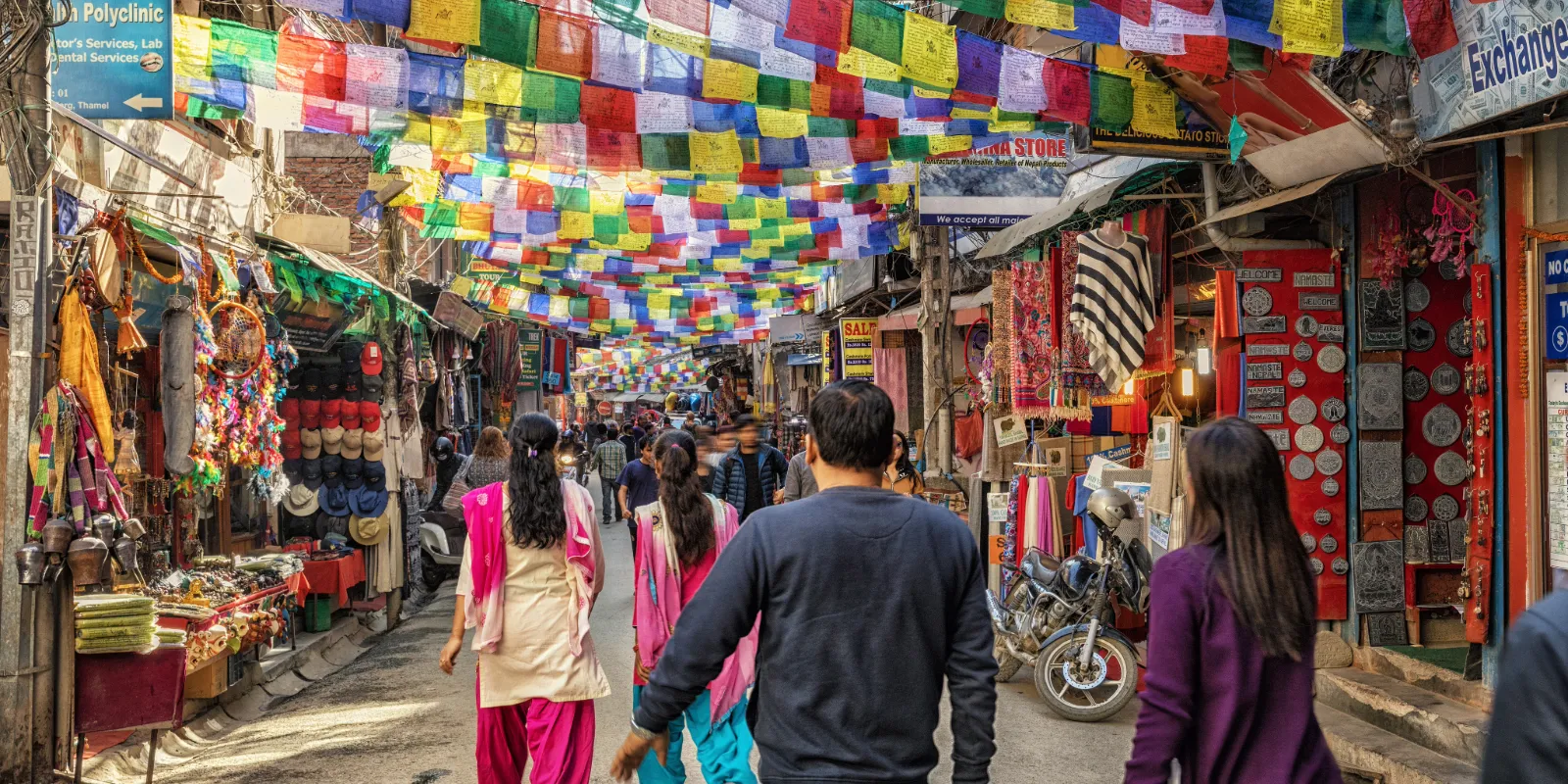
Once you’ve met your guide, you’ll be transferred to your hotel, where, after check-in, you can recover from your journey or take a short walk around to explore the local market of Kathmandu. While exploring, you can also rent or purchase gear such as binoculars, field guides, and cameras needed for observing and documenting flora and fauna during your journey.

Day 2 :

Drive to Syabrubesi (1,503m) from Kathmandu (1,324m)

road

Drive Distance

122km

departure_board

Drive Duration

7-9 hours

home_pin

Place

Syabrubesi

The day starts early in Kathmandu with time to freshen up, have breakfast, and meet the guide at the hotel lobby before starting the drive toward Syabrubesi. For a large portion of the drive, the road runs next to the Trishuli River, which is one of the most popular sites for rafting in Nepal.

The journey passes several small towns and rural settlements where terraced farmland is a common sight, along with locals tending to crops and livestock. A stop can be made at Trishuli Bazaar for a lunch break, after which the drive continues uphill toward Dhunche (the administrative center of Rasuwa District).

From Dhunche, you’ll drive for another one to two hours to reach Syabrubesi, the main gateway to the Langtang Valley trek located near the entrance of Langtang National Park.

Langtang
Day 3 :

Trek from Syabrubesi (1,503m) to Lama Hotel (2,480m)

directions_walk

Trek Distance

11–12km

av_timer

Trek Duration

5-6 hours

home_pin

Place

Lama Hotel

The route first drops toward the Bhote Koshi River, where a suspension bridge provides the crossing point before heading towards another suspension bridge that leads into a dense forest of rhododendron, bamboo, oak, maple, and alder. This area lies within Langtang National Park, which is home to wildlife such as Himalayan black bears, red pandas, leopards, and mountain goats, although sightings are not always guaranteed.

The forest floor here is rich in mosses, lichens, and fungi, which support nutrient recycling and indicate a healthy ecosystem. During spring, rhododendron blooms attract pollinators like bees and various butterfly species, providing a great opportunity for botany lovers to study them.

After about 2–3 hours, you’ll reach Bamboo village. This is a group of teahouses in a canyon, perfect for having lunch and spotting red pandas, if you’re lucky. Beyond Bamboo, the route enters Rimche village, followed by a climb that leads to Lama Hotel. It is situated right between the forest, with several small lodges catering to trekkers.

Day 4 :

Trek from Lama Hotel (2,480m) to Langtang Village (3,430m)

directions_walk

Trek Distance

14–15 km

av_timer

Trek Duration

6-7 hours

home_pin

Place

Langtang Village

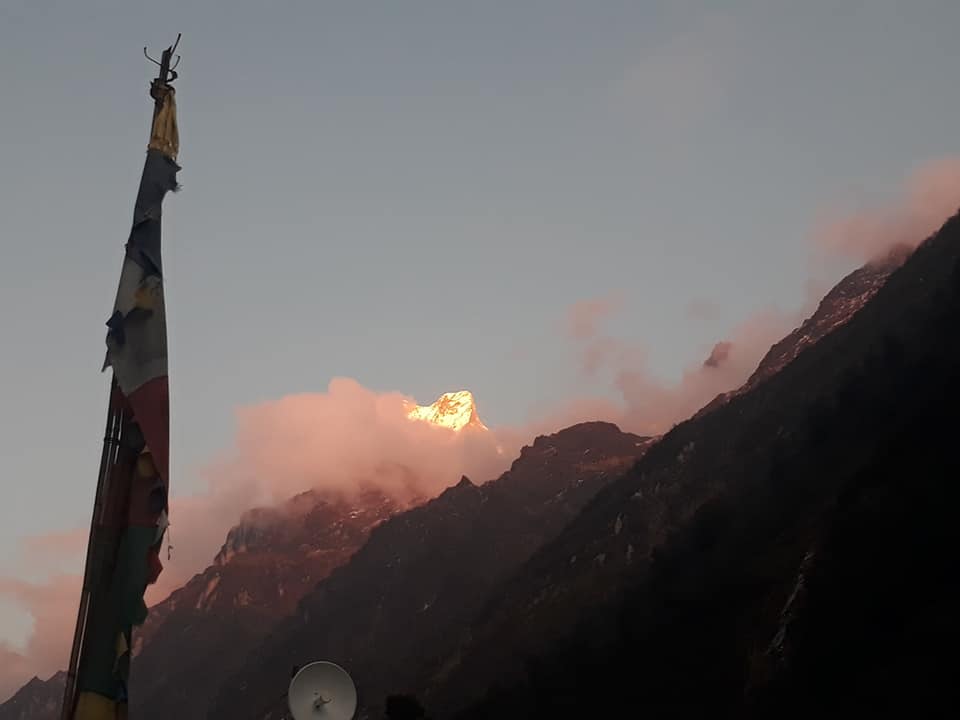
The route today doesn’t have that long, vast uphill climb, so the walk feels easier than the previous day. As soon as you leave Lama Hotel and start trekking alongside the Langtang Khola, the first settlement you’ll reach is Ghodatabela. From here, the surroundings open up into a U-shaped glacial valley, and for the first time, you will see the white peaks of Langtang Lirung (7,227m).

As the valley opens, the forest gives way to alpine grasslands and shrub vegetation, where plants like juniper and dwarf rhododendron are common. You may also notice birds such as Himalayan monals and snow pigeons in these open areas.

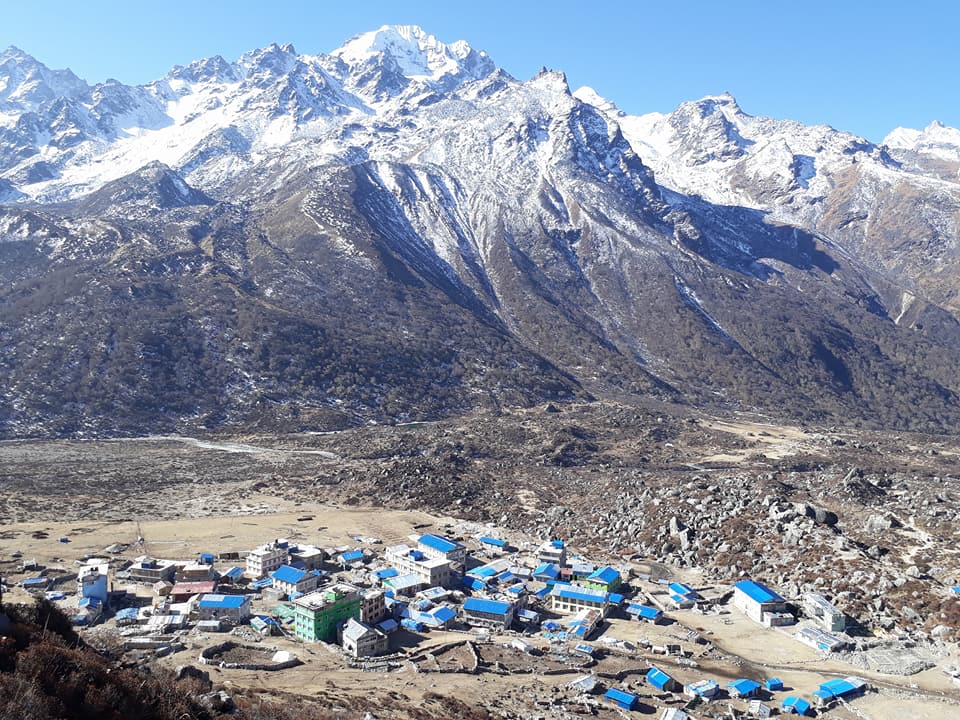
From this point, the route crosses the river again on a wooden bridge and takes you down to a glacier moraine. Beyond the moraine stands Langtang Village. The village was heavily affected by the 2015 Nepal earthquake, and rebuilding efforts are still visible in some areas. Many homes and lodges have already been reconstructed with improved structure and layout. This is your overnight stop for today.

Day 5 :

Trek from Langtang Village (3,430m) to Kyanjin Gompa (3,830m)

directions_walk

Trek Distance

6–7km

av_timer

Trek Duration

3-4 hours

home_pin

Place

Kyanjin Gompa

The trail between Langtang Village and Kyanjin Gompa passes through an open, mountainous area with some of the most beautiful Himalayan scenery. Soon after departure, you’ll cross pastureland and reach Mundo, which served as a temporary settlement when Langtang village was being rebuilt after the 2015 earthquake.

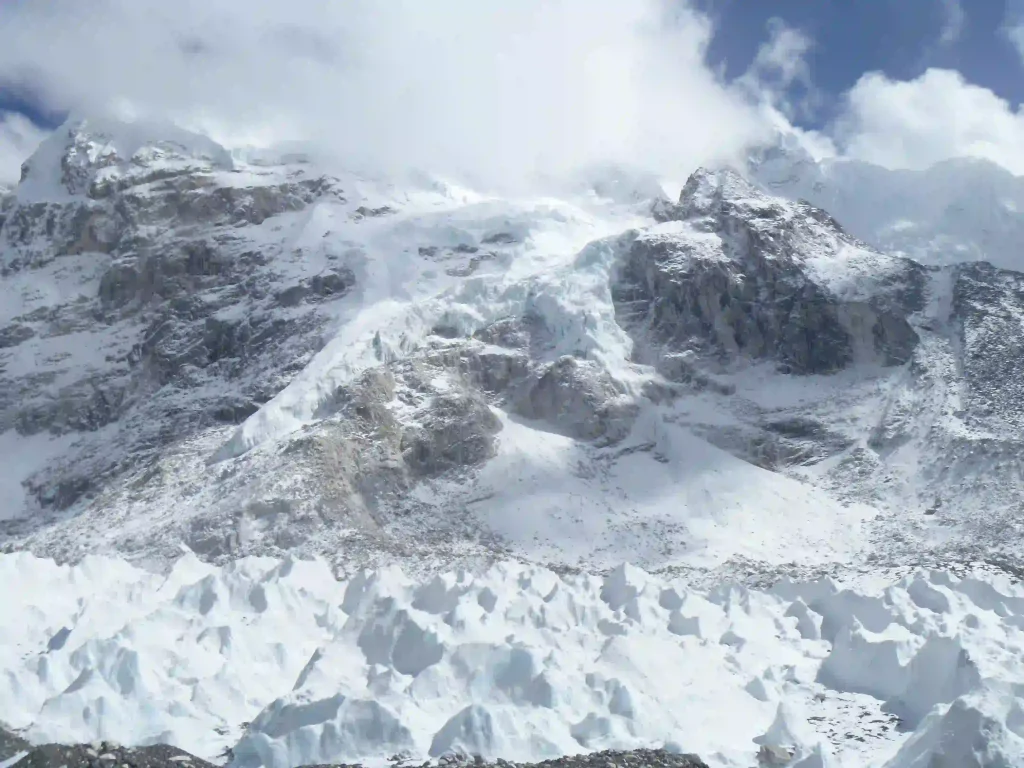
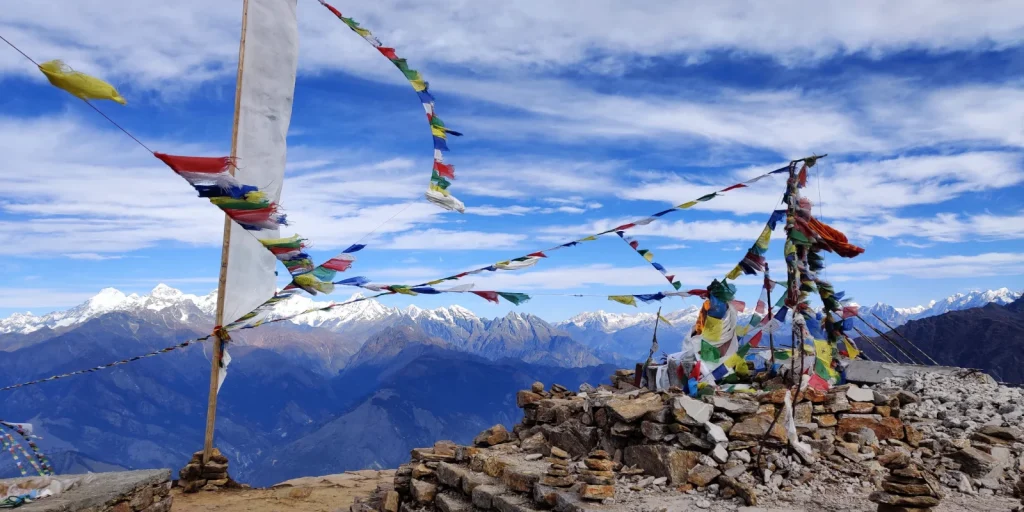
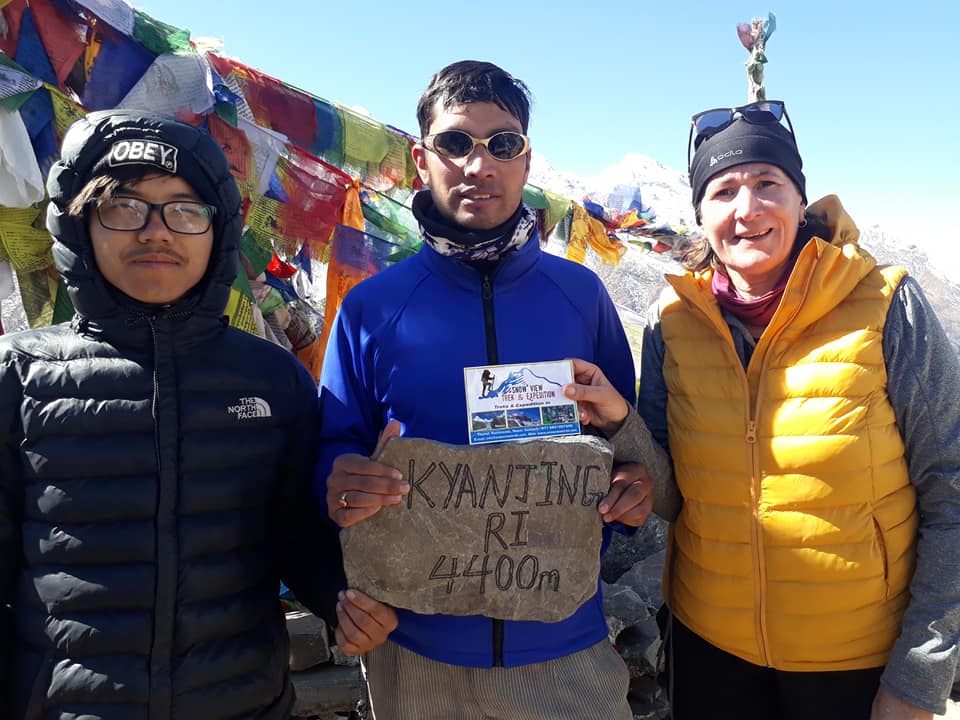
Beyond Mundo, the trek takes you to the settlements of Sindum and Yamphu before following the Laja Khola stream to a viewpoint that opens up views of Kinshung and the Langtang Lirung icefall. A short descent from this point brings the route to Kyanjin Gompa. If time allows, you can take a short hike to Kyanjin Ri, which is not as far or as difficult as the Tserko Ri summit.

Near the streams and moist areas around Kyanjin, you can find dwarf willow and alpine flowering plants during warmer months, while the cold waters support very limited aquatic life. You can also research small burrowing animals like pikas, which are important indicators of high-altitude ecosystem health.

Day 6 :

Excursion to Tserko Ri Peak (4,984m)

directions_walk

Trek Distance

8–10 km (round trip)

av_timer

Trek Duration

5–7 hours

home_pin

Place

Kyanjin Gompa

This is a challenging day, but the payoff is one of the most beautiful mountain panoramas in all of Nepal. The trail is not always clearly visible, so following a guide or group is essential for safety. At this high altitude, vegetation is extremely sparse, so only species like alpine mosses and micro-lichens that can survive UV radiation, freezing temperatures, and strong winds are found.

Once you reach the top of Tserko Ri, you’ll see Langtang Lirung right in front of you, Yala Peak, Ganjala Peak, Shishapangma (8,013m) of China, and the huge Langtang glacier. After spending time at the top and taking in the scenery, the descent follows the same route back to the village.

Wildlife at this elevation is rare. However, you may occasionally spot species like the snow partridge or signs of high-altitude mammals around the rocky, snow-covered areas.

Back in Kyanjin Gompa, the afternoon can be used for further exploration of the area. A visit to the local cheese factory is included, where traditional yak cheese is produced using old methods. You can taste it or buy it to support the local community that totally depends on it for their livelihood. The journey today is hectic but exciting.

Day 7 :

Explore Langshisa Kharka (4,200m), return to Kyanjin Gompa (3,830m)

directions_walk

Trek Distance

8km

av_timer

Trek Duration

4-5 hours

home_pin

Place

Kyanjin Gompa

On day 7 of your Langtang Gosaikunda trek itinerary, instead of returning down the valley, you’ll continue east toward Langshisha Kharka. While Tserko Ri was about the height and summit views, this excursion is about the glacial beauty of the inner Langtang valley. You’ll move closer to the Langshisha Glacier and the Shalbachum Glacier, where the massive moraines and the famous “Langshisha Ri” red stones can be seen.

This higher valley section is one of the best places to spot Himalayan Snowcocks, Tibetan Snowfinches, and Blue Sheep (Bharal). Only small ground-level plants and shrubs grow here that survive strong winds, cold nights, and thin soil at high altitude. After a full day of exploration, you’ll return to the comfort of your teahouse in Kyanjin Gompa for your final night at this elevation.

Day 8 :

Trek from Kyanjin Gompa (3,830m) to Lama Hotel (2,450m)

directions_walk

Trek Distance

18–20km

av_timer

Trek Duration

6-7 hours

home_pin

Place

Lama Hotel

Today’s journey leads back to Lama Hotel, with an optional early visit to the Kyanjin monastery for those who wish to explore before departure. After breakfast, the trek begins out of the village and passes Langtang Village, Ghoda Tabela, and an alpine forest zone until you reach Lama Hotel.

As you descend, the ecosystem shifts from alpine to temperate forests where conifers like fir and hemlock start to reappear. Fallen leaf litter in this zone plays an important ecological role by recycling nutrients back into the forest floor.

This mid-elevation forest belt is also an important route for wildlife movement, where animals like Himalayan black bears and barking deer can sometimes be heard more than seen due to their sharp voices. Bird diversity increases significantly here; you can see species such as the Himalayan bulbul, green-tailed sunbird, and black-faced warbler that rely on fruits, insects, and nectar sources. By this point, your study of flora and fauna will be about halfway complete.

Day 9 :

Trek from Lama Hotel (2,480m) to Thulo Syabru (2,200m)

directions_walk

Trek Distance

12km

av_timer

Trek Duration

6-7 hours

home_pin

Place

Thulo Syabru

The trek from Lama Hotel to Thulo Syabru follows a familiar morning routine that starts with breakfast and preparation before returning to the trail. You’ll begin by following the Langtang River downstream back toward Pairo (Landslide). At Pairo, the trail splits. Instead of going down toward Syabru Beshi, you take the upper trail that starts to climb toward Thulo Syabru.

Thulo Syabru is one of the largest and most beautiful Tamang villages in the region. From here, you get a stunning view of the mountains you just left behind, including Ganesh Himal and Langtang Himal. It is also a good place to find better Wi-Fi or a hot shower before you head back up into the high-altitude lake region.

Day 10 :

Trek from Thulo Syabru (2,200m) to Foprang Danda (3,800m)

directions_walk

Trek Distance

10km

av_timer

Trek Duration

6-7 hours

home_pin

Place

Foprang Danda

After leaving Thulo Syabru, you’ll quickly climb above the village, where the houses appear as small dots below. The route then enters a forest of hemlock, oak, and large rhododendron trees, which is a good habitat for birdlife, including the Himalayan griffon vulture, Lammergeier (also called the bearded vulture), snow pigeon, alpine chough, and Himalayan Monal (the national bird of Nepal). 

As soon as you cross the forest area and Dursagang village, you’ll reach the Foprang Danda. “Danda” means ridge, so this hilltop village offers the best view of Ganesh Himal, Manaslu, and even the Annapurna range on a very clear day. The ridge environment here is affected by strong winds and high sun exposure. During warmer seasons, flowers like Primula denticulata attract pollinators such as the Apollo butterfly (Parnassius epaphus), which is commonly found in these Himalayan areas.

Day 11 :

Trek from Foprang Danda (3,800m) to Sing Gompa (Chandanbari 3,250m)

directions_walk

Trek Distance

6km

av_timer

Trek Duration

3-4 hours

home_pin

Place

Sing Gompa

You’ll continue your ascent toward the Sing Gompa, also known as Chandanbari, by following the moss-covered forest trails that bloom in pink and red during the spring (March/April) season. Bamboo patches are also found in this part, which are important as a natural habitat for the rare red panda. If your wildlife study includes red pandas, be ready with binoculars to try to spot one.

The area is suitable for short forest walks, birdwatching, and photography due to its peaceful surroundings and diverse plant life, including medicinal herbs used by local communities.

Today is not a long trekking day; it is a short 2 to 3-hour hike to Sing Gompa. This place is home to a beautiful old Buddhist monastery where visitors can explore the shrine and observe the evening prayers. Similar to Kyanjin Gompa, there is also a well-known cheese factory here.

Day 12 :

Trek from Sing Gompa (3,250m) to Laurebina (3,910m)

directions_walk

Trek Distance

7km

av_timer

Trek Duration

5-6 hours

home_pin

Place

Laurebina

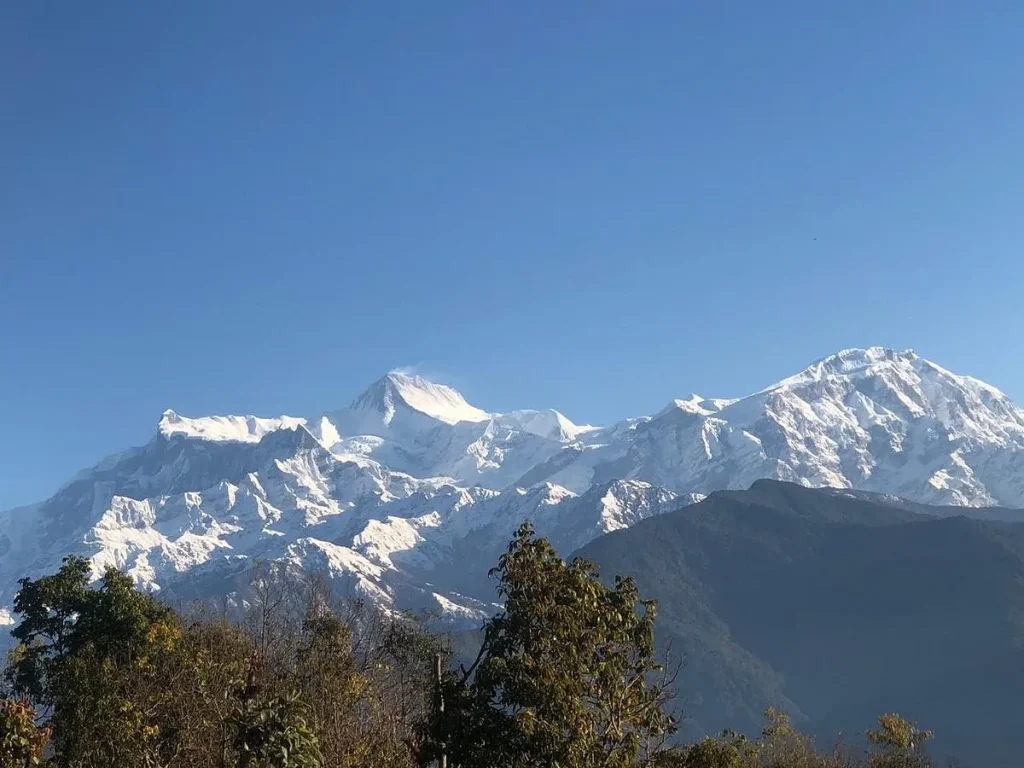
This day is considered one of the most beautiful walking days of the entire trek because of the beautiful “balcony” views of the Annapurna Range, Manaslu, and Ganesh Himal. You’ll start with a climb through mossy forests and reach Cholangpati (3,654m) after 1.5 to 2 hours, a common spot for a tea break with a view.

This forest area is home to animals like the red fox, which grows a thick coat to survive the cold, plants like medicinal herbs, lichen, and moss, and birds like the spotted nutcracker, which helps spread seeds of high-altitude trees such as Abies spectabilis. The presence of these animals indicates that the ecosystem is healthy and supports a balanced food chain.

From Cholangpati, you’ll continue your trek for 1 hour until you reach Laurebina. The name “Laurebina” translates to “without a stick.” Legend says that pilgrims traveling to the lakes would leave their walking sticks here. You rest for the day and give your legs a break here.

Day 13 :

Trek from Laurebina (3,910m) to Gosaikunda Lake (4,400m)

directions_walk

Trek Distance

5km

av_timer

Trek Duration

2-3 hours

home_pin

Place

Gosaikunda

The trek continues upward to the high-altitude lakes of Gosaikunda Lake, passing two important smaller lakes on the way. The first is Saraswati Kunda and the second is Bhairav Kunda, known for its deep, dark-blue water and beautiful mountain views.

Around these glacial lake areas, plant life is very limited, and only a few plants like Arenaria and Saxifraga grow in the cracks between rocks. These plants are able to survive cold conditions and short summers, so they complete their growth in just a few weeks.

The wet areas near the lakes also provide habitats for small amphibians and tiny water creatures that are adapted to cold water. There is limited plant and animal life in this area, so you may not find much variety to study.

As the path continues, the journey reaches Gosaikunda Lake at 4,380m. A small shrine of Lord Shiva is located near the lake shore, and it is an important pilgrimage site during the Janai Purnima festival, when many Hindu and Buddhist devotees come to bathe in the holy water to wash their sins.

Day 14 :

Trek from Gosaikunda Lake (4,400m)to Cholangpati (3,654m)

directions_walk

Trek Distance

7km

av_timer

Trek Duration

4-5 hours

home_pin

Place

Cholangpati

Instead of crossing the high pass toward Helambu, you’ll begin your descent back toward civilization. The route leaves the high alpine zone and enters forest areas where the vegetation is thicker and greener. This section of the trail also offers opportunities to explore flora and fauna, as it passes through habitats where wildlife can sometimes be seen.

Species such as red panda, Himalayan black bear, langur monkeys, and musk deer are known to live in nearby forest zones. Bird sounds are common throughout the walk, while open spaces between the trees occasionally reveal beautiful Langtang range views. After arriving at Cholangpati, you can relax at your lodge and enjoy a fresh meal for dinner.

Day 15 :

Trek from Cholangpati (3,654m) to Dhunche (1,462m)

directions_walk

Trek Distance

12km

av_timer

Trek Duration

5-7 hours

home_pin

Place

Dhunche

Your days in the Langtang region are finally completed here. You’ll pass back through Sing Gompa (Chandan Bari), and this is your last chance to grab some world-famous yak cheese directly from the source to take home as a souvenir.

Below Sing Gompa, the trail descends into the forest. Bird calls can be heard, and small waterfalls appear from time to time. As you approach Dhunche, you’ll start to hear the sounds of vehicles and the activity of people in a mountain town. Along the way, the route passes the office of Langtang National Park, where trekking permits are registered at the start of the journey. After arriving in Dhunche, you will be taken to your hotel, where you will stay overnight before departing for Chitwan tomorrow.

Day 16 :

Drive from Dhunche (1,462m) to Chitwan (800m)

road

Drive Distance

140km

departure_board

Drive Duration

6-7 hours

home_pin

Place

Chitwan

The first few hours of the drive follow an unpaved road from Dhunche to the Trishuli River valley, with the landscapes changing from pine forests to terraced rice paddies and tropical fruit trees. You’ll eventually reach the main highway that connects Kathmandu to the west. From here, the road levels out as you follow the river toward the plains.

Upon arrival at your jungle lodge, you will be greeted with a cold drink and a briefing about the wildlife activities planned for the next two days. If you arrive before sunset, we will go to watch the sun set over the Rapti River, sometimes with a rhino or crocodile visible on the riverbank.

Day 17 :

Full Jungle Safari Day (Main Wildlife Day)

road

Drive Distance

20–40km

departure_board

Drive Duration

3-4 hours

home_pin

Place

Chitwan

Day 17 is fully focused on wildlife activities inside Chitwan National Park, which is one of the most important protected areas in Nepal. This park is known for its large variety of animals and birds. The day starts with a visit to the Elephant Breeding Center, where details about elephant care and conservation are shared. After this, a jeep safari or elephant safari is arranged inside the park, where animals like the one-horned rhinoceros, deer, and many bird species can be seen.

Later, a canoe ride takes place on the Rapti River. You can see crocodiles, muggers, and water birds like Kingfishers, egrets, and storks resting on the riverbank. A guided walk inside the forest is also included, where natural trails are explored with the help of an experienced guide. The day ends with an evening walk around the Tharu villages.

Day 18 :

Bird Watching and Jungle Walk with Village tours

directions_walk

Trek Distance

5–8km

av_timer

Trek Duration

3–5 hours

road

Drive Distance

5–15km

departure_board

Drive Duration

1–2 hours

home_pin

Place

Chitwan

The day starts early in the morning inside Chitwan National Park with a guided bird watching walk. The early hours are the best time to observe bird activity. There are around 540 bird species found in the forest and river areas of Chitwan National Park. The most popular bird species are the white-throated kingfisher, pied kingfisher, the Stork, the Orioles, Ddrongos, the Paradise Flycatcher, and the rare Bengal Florican.

A nature walk through jungle paths follows, where a guide explains different parts of the environment in simple terms. This includes information about medicinal plants used by local communities, the structure of the Sal forest and grassland areas, and basic signs left by animals such as footprints and feeding marks.

The day ends with a village tour and a Tharu cultural dance show in the evening.

Day 19 :

Drive from Chitwan (800m) to Kathmandu (1,324m)

road

Drive Distance

160km

departure_board

Drive Duration

6-7 hours

home_pin

Place

Kathmandu

Today, you leave the warm tropical air of the Terai behind and climb back into the hills toward the capital (Kathmandu). The drive follows the Mahendra Highway until Mugling, where the road turns north and continues along the Prithvi Highway toward Kathmandu.

Once you pass through the Nagdhunga checkpost, the entire capital city comes into view. Your driver will drop you back at your hotel or your chosen area so you can finally enjoy a hot shower and full-speed Wi-Fi after spending weeks in the remote regions of Nepal.

Day 20 :

Event day in Kathmandu, overnight at the Hotel

Our company will organize a final celebratory dinner at a traditional restaurant with Nepalese folk music to celebrate the successful completion of your Langtang Gosaikunda and Chitwan tour. You will also be presented with a Trekking Achievement Certificate. This document includes your name, the highest altitude reached, and the dates of your journey.

This Event Day is also the formal time to say goodbye to the staff who made your trip possible. It is also the appropriate moment to distribute tips to your guide and porters as a gesture of appreciation for their hard work, safety management, and the insider knowledge they shared.

Day 21 :

Transfer to the international airport for your departure

Our representative from the trekking agency will pick you up in a private vehicle and transfer you to the Tribhuvan International Airport (TIA) at least 3 hours before your scheduled flight time to account for traffic and security checks.

Make sure your Achievement Certificate and Tokens of Love are safely packed in your carry-on so they don’t get bent or damaged in checked luggage. Thank you for your time and for traveling with our agency. We hope to welcome you again on another journey in the future.

Cost Include

Transportation:

  • Airport pickup and hotel transfers in a private vehicle
  • Drive from Kathmandu to Syabrubesi and Dhunche to Chitwan and back to Kathmandu by Tourist Bus( transport )

Trek Permits and Expenses:

  • Chitwan and Langtang National Park entry permit fee and TIMS card
  • All government, local taxes, and official expenses

Accommodation:

  • In Kathmandu: accommodations on a twin/double sharing basis with breakfast
  • During Trek: Total 14 nights Standard rooms on a twin/double sharing basis
  • During Chitwan: 3 nights’ accommodations on a twin/double sharing basis with breakfast

Meals:

  • Breakfast in Kathmandu
  • Standard full Board Meals During the Treks and Chitwan (one main course per meal with tea and coffee)
  • Fresh seasonal fruit served along the trail after dinner
  • Farewell dinner at the end of the trek in Kathmandu Valley

Guide and Porter:

  • Government-licensed holder, highly experienced, English-speaking guide
  • One assistant guide for more than 12 trekkers
  • 12.5 kg baggage allowance carried by porters (1 porter for 2 trekkers)
  • All staff’s insurance, salary, equipment, flight or transport, food, and accommodation

Medical Assistance:

  • Assistance in arranging rescue operations in case of complicated health conditions (funded by travel insurance)
  • Medical kits, including an oximeter to monitor blood oxygen saturation levels in high altitudes

Equipment and Extra:

  • Use of a Snow View Trek’s Team down jacket and sleeping bag during the trek (If needed)
  • One trekking duffel bag (70 L) per participant
  • Complimentary one Langtang route map and T-shirt
  • An appreciation certificate after the successful trek.

Cost Exclude

  • Visa fees
  • Domestic airfare and airport tax.
  • Int’l air fare
  • Personal expenses (phone calls, laundry, boiled water, shower, battery recharge, Bar bills, or extra porters)
  • Excess baggage charges
  • Rescue & Evacuation
  • Travel and rescue insurance
  • Extra night in Kathmandu (if you arrive early or late from the mountain )
  • Lunch & evening meals in Kathmandu.
  • Tips for guides and porters (for staff)

Private Trip

Prefer a more personal journey? Our private packages offer flexible dates, custom itineraries, and dedicated support—perfect for those seeking a tailored travel experience.

Langtang Gosainkunda Biodiversity Trek Trip Information

Langtang Gosainkunda Biodiversity Trek Distance, Duration, and Altitude Summary

Day Route Walking Distance (km/miles) Duration Elevation Loss/Gain
1 Arrival in Kathmandu
2 Drive Kathmandu → Syabru Beshi 122 km / 76 miles (drive) 7–9 hours Gain: 179m
3 Syabru Beshi → Lama Hotel 11 km / 6.8 miles 5–6 hours Gain: 977m
4 Lama Hotel → Langtang Village 15 km / 9.3 miles 6–7 hours Gain: 950m
5 Langtang → Kyanjin Gompa 6-7 km / 3.7-4.3 miles 3–4 hours Gain: 400m
6 Excursion to Tserko Ri 10 km / 6.2 miles 5–7 hours Varies
7 Exploration: Langshisa Kharka 8 km / 5 miles 4–5 hours Varies
8 Kyanjin Gompa → Lama Hotel 18-20 km / 11-12.4 miles 6–7 hours Loss: 1350m
9 Lama Hotel → Thulo Syabru 12 km / 7.5 miles 6–7 hours Loss: 280m
10 Thulo Syabru → Foprang Danda 10 km / 6.2 miles 6–7 hours Gain: 1600m
11 Foprang Danda → Sing Gompa 6 km / 3.7 miles 3–4 hours Loss: 550m
12 Sing Gompa → Laurebina 7 km / 4.3 miles 5–6 hours Gain: 660m
13 Laurebina → Gosaikunda Lake 5 km / 3.1 miles 2–3 hours Gain: 490m
14 Gosaikunda → Cholangpati 7 km / 4.3 miles 4–5 hours Loss: 726m
15 Cholangpati → Dhunche 12 km / 7.5 miles 5–7 hours Loss: 2912m
16 Drive Dhunche → Chitwan 140 km / 87 miles (drive) 6–7 hours Loss: 662m
17 Jungle Safari in Chitwan National Park
18 Bird Watching & Village Tour (Chitwan) 5–8 km / 3–5 miles 3–5 hours Varies
19 Drive Chitwan → Kathmandu 160 km / 99 miles (drive) 6–7 hours Gain: 700m
20 Event Day in Kathmandu
21 Departure from Kathmandu

Do I need an extra permit for Langtang Gosaikunda Flora and Fauna Trek? 

For the Langtang Gosaikunda Flora and Fauna Trek combined with a visit to Chitwan National Park, you do not need any special “flora and fauna” permit because conservation access is already covered under the national park systems. Below are all required and conditional permits with cost and details.

Langtang National Park Permit Chitwan National Park Entry Permit
  • Foreigners: NPR 3,000 + 13% VAT (~USD 25)
  • SAARC nationals: NPR 1,500 (~USD 10)
  • Nepali: NPR 100
  • Foreigners: NPR 2,000 per day (~USD 13)
  • SAARC nationals: NPR 1,000 (~USD 7)
  • Nepali: NPR 150

Note: The TIMS card is no longer important for this trek, and the Shivapuri National Park Permit (for Shivapuri Nagarjun National Park) is needed only if you start trekking from Sundarijal near Kathmandu.

Who should consider this trek for in-depth Himalayan ecology exploration?

The Langtang Gosaikunda Trek is best for people who want to study Himalayan ecology in depth, not just complete a trek. Inside Langtang National Park, the route crosses about six climate zones within a short distance, from lower forests to high alpine terrain above 4,000 m. This makes it useful for ecology students, botanists, and researchers who want to observe plant changes by altitude.

This trek also suits wildlife photographers, bird watchers, and conservation-focused travelers. More than 250 bird species have been recorded here, including the Himalayan monal, which is the national bird of Nepal. The area also shows how local life recovers and adapts after events like the 2015 Nepal earthquake. Local Tamang communities manage land and forests through buffer zone systems, which makes the trek useful for those interested in conservation and sustainable tourism.

Best Time for Flora and Wildlife Exploration in Langtang and Gosaikunda Region

For both the high-altitude trek and the jungle safari, Spring (March to May) is the overall best time for flora and wildlife exploration. Below is a clear table to help you choose the best season based on your preferences.

Feature Best Months Why?
Rhododendron Blooms Late March – April The forests between Lama Hotel and Ghodatabela bloom in red, pink, and white blossoms.
Red Panda Sightings March – May Animals are most active foraging for fresh bamboo as winter snow melts.
Alpine Wildflowers March – April

Species like Blue Poppies, gentians, and edelweiss bloom near Kyanjin Gompa and Tserko Ri.

Birdwatching March – April Active period for more than 250 species, including the Himalayan Monal and Satyr Tragopan, as the breeding season begins.

What should botany students and wildlife researchers pack for a flora-focused trek in Langtang?

For botany students and wildlife researchers, a trek in the Langtang needs more than basic trekking gear. Since Langtang is a national park, researchers must follow non-disruptive methods and carry the necessary permits. Let’s have a look at the packing list.

  • Paper bags for seeds and fruits (avoid plastic)
  • 10x–20x hand lens for detailed plant study
  • Waterproof field notebook for notes, habitat, and GPS data
  • Digital camera with macro lens and scale for documentation
  • Gaiters for mud, snow, and leech protection
  • Waterproof, high-ankle trekking boots for rough terrain
  • Offline GPS maps with Langtang topographic data (e.g., Gaia GPS, Avenza)
  • Headlamp with extra batteries for early/late surveys
  • Emergency whistle for safety
  • 8×42 binoculars for wildlife observation
  • Altimeter to track elevation data
  • Blotting or newsprint paper to absorb moisture and prevent mold
  • Field guides for Himalayan flora and fauna

Top 10 Rare Animals and Plants to Spot on Langtang Gosaikunda Trek

The Langtang and Gosaikunda regions are rich in biodiversity, with more than 46 species of mammals and over 1,000 types of plants found across different altitudes. Let’s see some of the rare animals and plants found here.

Type Name Scientific Name
Animals
  • Red Panda
  • Snow Leopard
  • Himalayan Tahr
  • Musk Deer
  • Himalayan Black Bear
  • Langur Monkey
  • Himalayan Monal
  • Blood Pheasant
  • Yellow-throated Marten
  • Tibetan Snowcock
  • Ailurus fulgens
  • Panthera uncia
  • Hemitragus jemlahicus
  • Moschus chrysogaster
  • Ursus thibetanus
  • Semnopithecus schistaceus
  • Lophophorus impejanus
  • Ithaginis cruentus
  • Martes flavigula
  • Tetraogallus tibetanus
Plants
  • Himalayan Blue Poppy
  • Rhododendron arboreum
  • Juniper
  • Himalayan Birch
  • Edelweiss
  • Nardostachys (Spikenard)
  • Daphne (Lokta)
  • Himalayan Yew
  • Cobra Lily
  • Primula
  • Meconopsis grandis
  • Rhododendron arboreum
  • Juniperus indica
  • Betula utilis
  • Leontopodium himalayanum
  • Nardostachys jatamansi
  • Daphne bholua
  • Taxus wallichiana
  • Arisaema tortuosum
  • Primula denticulata

What makes this trek-to-jungle combination ideal for studying altitude-based ecosystem transitions?

The Langtang–Chitwan trek-to-jungle combination is ideal for studying because it covers a full range from high mountains to tropical plains in one journey. The route starts near Tserko Ri at 4,984m and drops to about 150m in Chitwan. This large change in altitude shows how ecosystems vary with elevation. Temperature increases by about 1°C for every 150–200m of descent, which leads to clear changes in vegetation.

This route also compares how animals and water systems adapt across elevations. In the upper regions, species like the Himalayan goat survive cold conditions with thick fur and strong climbing ability, while in the lowlands of Chitwan National Park, animals such as the rhinoceros depend on water and shade to keep their body temperature under control. The trail follows part of the Chitwan–Annapurna landscape corridor, which also supports the movement of birds and insects between mountains and plains, making it suitable for research and study.

Frequently Asked Questions about Langtang Gosainkunda Biodiversity Trek

Our Latest Blog

Attractions, Tips & Activities. Explore Now!

View All Blog

Plan Your Perfect Adventure

Tell us where you want to go and we’ll take care of the rest.
Get a custom travel plan tailored to your interests and schedule.

Start Planning