search
search

Mardi Himal Trek

globe_location_pin

Country

Nepal

calendar_clock

Duration

10 Days

avg_pace

Difficulty

Moderate
partly_cloudy_day

Best Season

Feb, Mar, Apr, May, Sept, Oct, Nov, Dec

conversion_path

Start / End Point

Kathmandu/Kathmandu

landscape_2

Max. Altitude

4500

landscape

Nature Of Trek

Lodge to lodge trekking

footprint

Activity

Trekking

directions_walk

Trek Duration

10

location_on

Region

Annapurna Region

groups

Group Size

2 - 29

code_blocks

Trip Code

SVTMH09

hiking

Activity Per Day

4-7 hours walking

home

Accommodation

Hotel+Lodge
flatware

Meals Included

Breakfast, Lunch, Dinner
local_taxi

Transportation

Bus

editor_choice

Recommended For

Trekkers wanting a remote trail with moderate fitness

Mardi Himal Trek Highlights

  • Walk past oak, maple, and rhododendron forests between Kande and Low Camp
  • Stay in small, community-operated teahouses throughout the trail network
  • Witness Annapurna I (8,091m), the tenth-highest mountain on Earth, alongside Annapurna South (7,219m) and Hiunchuli (6,441m) from the Upper View Point
  • Trek through the Annapurna Conservation Area (the largest protected area in Nepal)
  • Explore the Gurung villages of Sidhing and Lumre
  • Avoid the crowds common on the Annapurna Sanctuary and Poon Hill routes
  • Photograph sunrise light hitting the Annapurna range from the Mardi Himal Viewpoint

Overview

The Mardi Himal Trek is a 10-day journey through the Annapurna Conservation Area, which takes trekkers to Mardi Himal Base Camp at approximately 4,500m. Unlike the more crowded Annapurna Base Camp or Poon Hill routes, this trail was undiscovered until the mid-2010s, so trekkers can walk through rhododendron and oak forests with far fewer people around. The route enters Gurung villages such as Sidhing and Lumre, where trekkers can observe terraced farming, traditional stone-and-wood homes, and the daily routines of families who have lived in these mid-hills for generations.

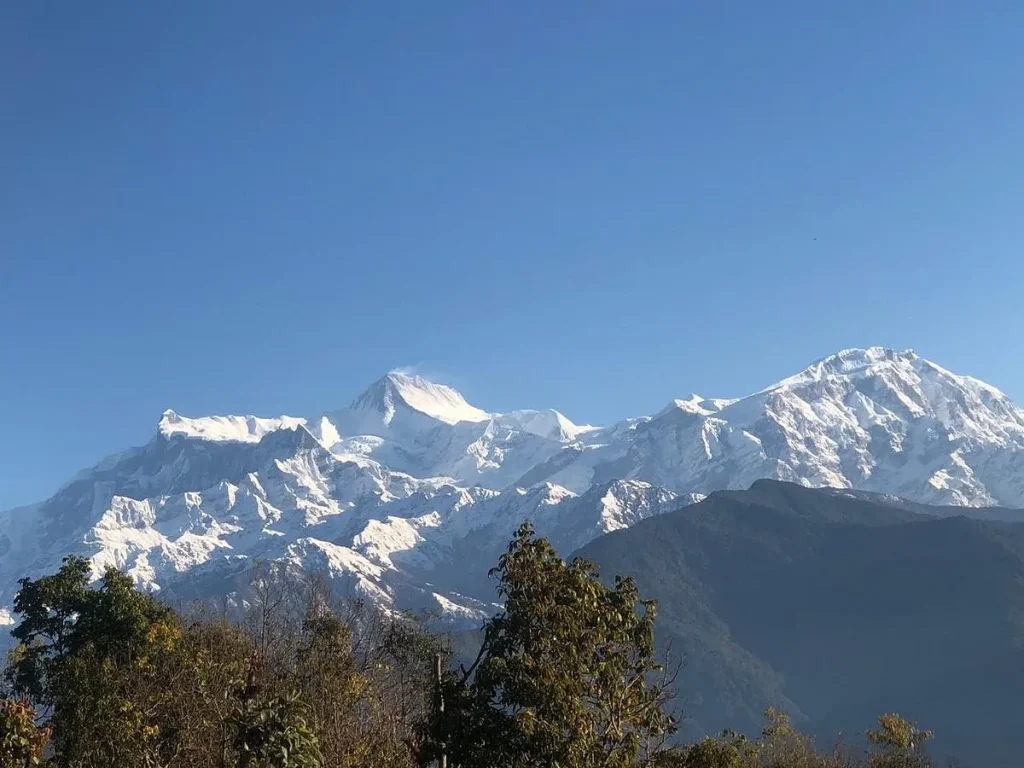
The trek also offers beautiful views of some of the most famous peaks of Annapurna region without any need for technical climbing skills. From the Upper View Point, located above Mardi Himal Base Camp, you can see Machhapuchhre (Fishtail, 6,993m), Annapurna I (8,091m), Annapurna South (7,219m) and Hiunchuli (6,441m). Because Mardi Himal is situated on a separate ridge from the main Annapurna Sanctuary trail, these peaks appear closer and at different angles than they do from other Annapurna-region treks.

Physically, the trek suits people with moderate fitness and some previous hiking experience, as daily walking hours range from four to seven, with the final push to base camp involving steeper areas. Accommodation options on the route range from basic teahouses to upgraded lodges with private rooms and better meal variety.

If you want to explore this hidden place, Snow View Treks organizes the Mardi Himal Trek with licensed local guides, plans departures according to the Annapurna Conservation Area’s permit requirements, and arranges accommodation that gives enough time for altitude acclimatization.

Mardi Himal Trek Itinerary

Day 1 :

Arrival in Kathmandu (1,400m) and Transfer to Hotel

road

Drive Distance

5–10 km

departure_board

Drive Duration

20–40 minutes

altitude

Highest Altitude

1,400m

home_pin

Place

Kathmandu

Once you land at Tribhuvan International Airport, go to the electronic kiosks if you need a visa on arrival, where you scan your passport and fill out a short digital form. Walking out of the terminal can feel like a lot all at once since you step into a courtyard full of drivers, guides, and hotel staff holding up name signs. Look carefully in the crowd for your name or our trekking agency logo, and once your driver finds you, they will take your bags and hand you a silk scarf called a khada as a warm welcome and a wish for good luck on your trip ahead.

The drive from the airport to the tourist area of Thamel takes thirty minutes to an hour depending on how heavy the traffic gets. Once you reach your hotel, you can check in, head to your room, and enjoy a hot shower to wash off the tiredness of the flight. If you arrive with some daylight left, take a walk around the Thamel market. It is also a good time to pick up anything you still need for the trek. In the evening, you will meet your agency manager for a welcome dinner where they will walk you through your permits, your daily plan, and your gear before answering any questions you have about the journey ahead.

Day 2 :

Drive from Kathmandu (1,400m) to Pokhara (822m)

road

Drive Distance

200km

departure_board

Drive Duration

6–8 hours

altitude

Highest Altitude

822m

home_pin

Place

Pokhara

Your day starts early so you can get past the traffic that builds up around the exit points of the Kathmandu Valley. If you take the tourist bus, you will head to Bus Park, a short ride from Thamel, where buses pull out right around 7 AM. These tourist buses are comfortable, air-conditioned, and have large storage space underneath for your trekking bags. The road first climbs up the valley near Nagdhunga before it drops down into the Trishuli River basin. From here you will follow the Trishuli River and later the Marshyangdi River for several hours.

On the way, the bus makes a few stops to keep you comfortable. Lunch usually happens around 12:30 PM near towns like Malekhu, Mugling, or Dumre, and this is a great chance to try a full plate of dal bhat with rice, lentils, and vegetable curry, which will keep your energy up for the rest of the drive. By late afternoon, you will reach the lakeside city of Pokhara somewhere between 3:30 and 5 PM. On a clear evening, look north, and you may catch your first view of the Annapurna range along with the Machhapuchhre peak (also known as Fishtail).

Day 3 :

Drive from Pokhara to Kande (1,770m) and Trek to Pothana Deurali (2,100m)

directions_walk

Trek Distance

6–7km

av_timer

Trek Duration

4–5 hours

road

Drive Distance

25–30km

departure_board

Drive Duration

1–1.5 hours

altitude

Highest Altitude

2,100m

home_pin

Place

Pothana Deurali

After a good breakfast at your hotel in Lakeside you will pack your bag and check out before hopping into a jeep for the one-hour drive to the trailhead at Kande (1,770m). The road follows the Baglung Highway, and as you climb out of the Pokhara valley, you will pass farming villages with beautiful views of terraced fields below and the Annapurna range to your right. Once you reach Kande, you will step out, unpack your poles, and take your very first steps on the Mardi Himal trail.

After about ninety minutes of climbing, the trail opens onto a flat grassy area known as Australian Camp (2,060m), known for providing Annapurna South and Machhapuchhre views. Within another hour, you will reach the stone village of Pothana, where your guide will check in your ACAP permit at the local police post while you rest at a nearby teahouse. From Pothana, the trail climbs again for about ninety more minutes until you reach Deurali (2,100m) village.

Day 4 :

Trek from Pothana Deurali (2,100m) to Forest Camp (2,520m)

av_timer

Trek Duration

4-5 hrs

altitude

Highest Altitude

2500m

home_pin

Place

Forest Camp

You will wake up around 6:30 AM, pack your bag, and enjoy a hot breakfast of porridge or fried eggs with chapati before heading out on the trail by around 7:30 AM. Just past the lodges of Deurali, you will see a wooden sign pointing toward Mardi Himal Trek, and once you follow this, your phone signal slows down, and the number of trekkers around you will drop noticeably. The path now leaves behind the stone steps you walked yesterday and turns into a forest track of tree roots and moss-covered rocks.

As you move deeper into the forest and pass around 2,400m, the humid air of the lower hills disappears and a cooler feeling takes over, so you may want to wear a fleece or windbreaker during your rest stops. After a final push up a series of steps, the forest opens up to a peaceful settlement known as Forest Camp or Koka (2,520m). You’ll arrive here between 12:30 and 1:30 PM, where you’ll find many simple wooden teahouses situated in a clearing surrounded by forest.

Day 6 :

Trek from Forest Camp (2,520m) to Low Camp (2,970m)

directions_walk

Trek Distance

5km

av_timer

Trek Duration

3–4 hours

altitude

Highest Altitude

2,970m

home_pin

Place

Low Camp

You’ll wake up around 6:30 AM, enjoy a hot breakfast of porridge, eggs, or Tibetan bread, pack your gear, and hit the trail by 7:30 AM. There is no easy warm-up today since the path climbs straight up from the bottom of the clearing and heads right back into thick forest. For the first ninety minutes or so, you will keep climbing natural stone steps in classic Mardi Himal style, with the forest changing to old rhododendron and oak trees covered in lichen as you pass 2,800m.

As you get closer to 3,000m, you will start to feel the climb in your lungs a bit more than before. Keep your steps short rather than rushing, since saving your energy here matters for how you feel later at higher altitude. After around three hours of uphill walking, the thick trees thin out and the trail opens to a small grassy area known as Low Camp (2,970m). On a clear day, this is where the trek offers its best views, since Machhapuchhre appears directly ahead, looking far larger and closer than it did back in Pokhara.

Day 6 :

Trek from Low Camp (2,970m) to High Camp (3,580m)

directions_walk

Trek Distance

6km

av_timer

Trek Duration

4–5 hours

altitude

Highest Altitude

3,580m

home_pin

Place

High Camp

The route wastes no time today and climbs right away over a rocky path through the remaining areas of rhododendron trees. After about 1 hour of climbing, you reach Badal Danda (3,250m), which means Cloud Hill in the local language. This spot is well known for good reason, since you can look left into the canyon of the Modi Khola River that leads toward Annapurna Base Camp and look right into the drop of the Mardi Khola valley. Straight ahead, Machhapuchhre and Annapurna South appear completely clear with nothing blocking the view.

From Badal Danda the trail turns into a true ridge walk all the way to High Camp. You will follow the open alpine pastures where yaks and sheep sometimes graze during the warmer months. Around midday, warm air from the valleys rises and forms thick clouds that move over the ridge, covering the trail in soft white fog, so stay close to your guide and keep your trekking poles ready for balance until you reach High Camp (3,580m).

Day 7 :

Trek from High Camp to Upper Viewpoint (4,200m) or Mardi Himal Base Camp (4,500m), then return to High Camp

directions_walk

Trek Distance

8–10 km

av_timer

Trek Duration

6–8 hours

altitude

Highest Altitude

4,500m

home_pin

Place

High Camp

Layer up fully with thermal wear, a fleece, a warm down jacket, windproof pants, gloves, thick socks, and a beanie before heading down to the dining hall. Force yourself to drink a hot cup of black tea or ginger water and eat something light like a slice of Tibetan bread to wake your body up.

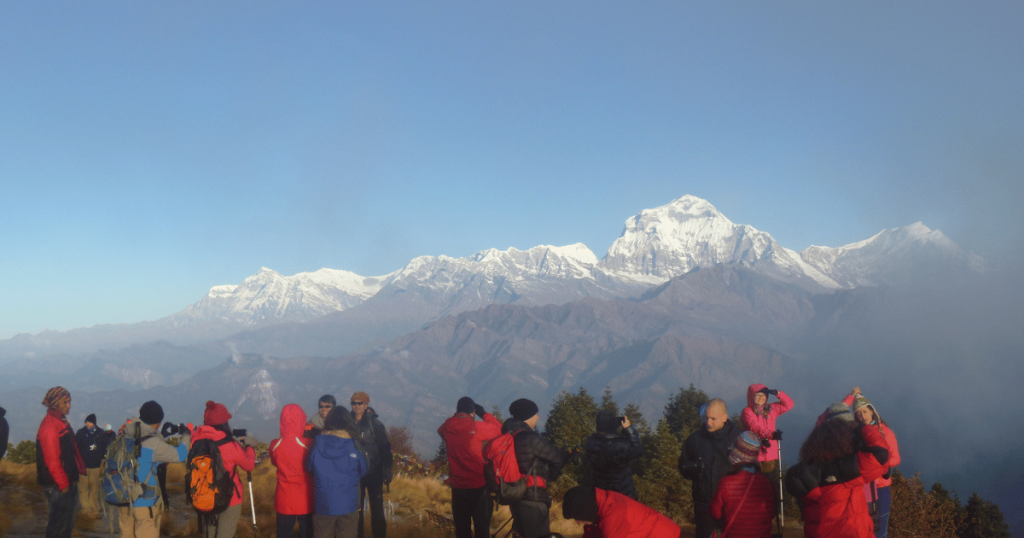
The climb starts right away at around 4 AM on stone steps that follow the ridge, and in the darkness your headlamp becomes your whole world. You will reach the Upper Viewpoint (4,200m) around 5:45 to 6 AM, just as the sky starts to glow from the morning light. Standing here, you can watch the sunrise over Machhapuchhre turning its snow deep red, along with Annapurna South, Hiunchuli, and Annapurna I.

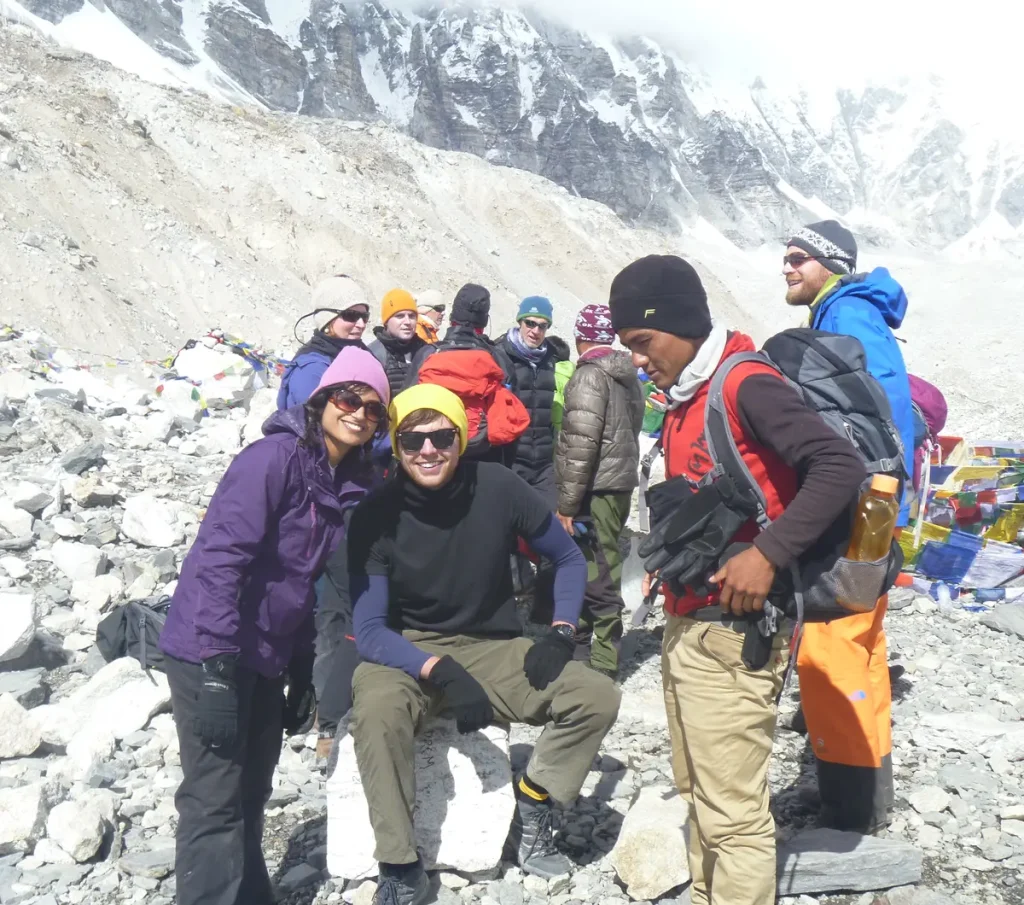
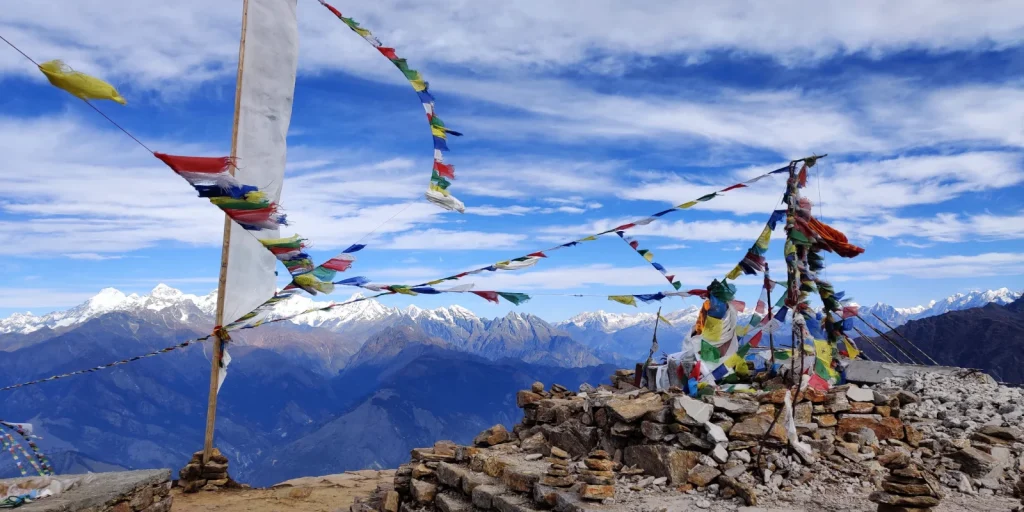
For many trekkers, the Upper Viewpoint feels like the perfect place to stop, but if you feel strong, you can continue toward the true Base Camp. It takes another one and a half to two hours of walking to reach Mardi Himal Base Camp (4,500m), decorated by prayer flags and a metal sign. Standing here, you find yourself beneath the south face of Mardi Himal and close to the base of Machhapuchhre. Once you take your photos and enjoy the moment, it is time to turn back and retrace your steps to High Camp.

Day 8 :

Trek from High Camp (3,580m) to Sidhing (1,700m)

directions_walk

Trek Distance

7km

av_timer

Trek Duration

5–6 hours

altitude

Highest Altitude

1,700m

home_pin

Place

Sidhing

Your morning starts with one last look at the Annapurna range before you head down. Since the tough summit push is already behind you, there is no need for a dark early start today, so you can enjoy a relaxed breakfast at High Camp. The first part of the walk takes you back on the same open ridge you climbed a few days earlier, passing through Badal Danda before reaching Low Camp. Once you reach Low Camp after about two to two and a half hours, it is a good place to drink some water, shed your warm jacket, and get ready for the forest areas ahead.

Right past the teahouses at Low Camp, you will leave your original path and turn onto a different trail that drops straight down toward the valley floor instead of heading back through Forest Camp. After crossing a few suspension bridges and walking past terraced fields, you will arrive in the traditional Gurung and Brahmin village of Sidhing (1,700m) somewhere between 2 and 3:30 PM. Here you will find a true working mountain village with water buffalo in the yards, children playing in the ground, and fields full of millet and corn.

Day 9 :

Trek from Sidhing (1,700m) to Lumre (1,600m) and Drive Back to Pokhara (822m)

directions_walk

Trek Distance

5km

av_timer

Trek Duration

2–3 hours

road

Drive Distance

40km

departure_board

Drive Duration

1.5–2 hours

altitude

Highest Altitude

822m

home_pin

Place

Pokhara

You will wake up around 7 AM and enjoy fresh breakfast at your homestay before packing up and hitting the trail by 8 AM. The walk from Sidhing to Lumre feels like saying goodbye to the trail and is very different from yesterday’s steep walk. The path follows a dirt road located beside the Mardi Khola River with no ridges or very long steps left to climb, so your knees finally get a break.

After about two to two and a half hours of walking, you will reach the Lumre town (1,600m) around 10:30 AM, which marks the end of the walking trail. From here, you will ride a private jeep for the drive back to Pokhara. The first part follows a dirt track out of the valley before joining a paved road near Hemja, and you will reach Lakeside Pokhara around 12:30 to 1 PM. After days in the mountains, getting back to your hotel will feel great, so take a long, hot shower and relax. Once you’re refreshed, head to Lakeside and enjoy a meal of your choice after days of simple trekking food.

Day 10 :

Drive Back to Kathmandu (1,400m) by Tourist Bus

road

Drive Distance

200km

departure_board

Drive Duration

6–8 hours

altitude

Highest Altitude

1,400m

home_pin

Place

Kathmandu

Most hotels are happy to prepare a simple breakfast box with boiled eggs, bread, and fruit if you ask the night before, which is handy for an early departure. A short walk takes you from Lakeside to the tourist bus park in Pokhara, where buses line up and pull out right around 7 AM. The first hour takes you out of the Pokhara valley through the Tanahun district before the road joins the Marshyangdi River. Later, past the junction town of Mugling, the route follows the Trishuli River, which is well known for rafting groups.

Around 12:30 PM, you will stop for a longer lunch break near the riverside town of Malekhu. You will reach the tourist bus drop-off point in Kathmandu near Shorakhutte or Balaju sometime between 3:30 and 5 PM, just a short ride from Thamel. After checking back into your hotel, we’ll take you to a farewell dinner at one of the restaurants, where you can enjoy a wood-fired pizza, a cold local beer, or a plate of hot, steaming momos.

What's included?

  • Airport pickup & drops.
  • Hotels in Kathmandu as per itinerary.
  • Domestic airfare and airport tax.
  • All meals & accommodation during the trekking period.
  • All entrance fees and trekking permits.
  • Highly experienced guide and staff (1 porter for 2 trekkers).
  • Salary, equipment, flight or transport, food, and accommodation.
  • All necessary ground transportation.
  • Travel & Rescue arrangements.
  • Welcome & farewell dinner in Kathmandu at a typical Nepali restaurant.

What's not Included?

  • Visa fees
  • Int’l air fare
  • Personal expenses (phone calls, laundry, boiled water, shower, battery recharge, bar bills, or extra porters)
  • Excess baggage charges
  • Rescue & Evacuation
  • Travel and rescue insurance
  • Extra night in Kathmandu (if you arrive early or late from the mountain)
  • Lunch & evening meals in Kathmandu.
  • Tips for guides and porters (for staff)

Departure

Private Trip

Prefer a more personal journey? Our private packages offer flexible dates, custom itineraries, and dedicated support—perfect for those seeking a tailored travel experience.

Good to Know

The itinerary can be changed or customized according to your duration of holidays & as per your requirements. The trip price will be according to Deluxe, Standard, Budget and group size so please kindly provide us your details for tailor made program. If this above itinerary is not suffice or have any questions, you can ask one of our expert team for help.

FAQs for Mardi Himal Trek

What is the difference between Mardi Himal and Annapurna Base Camp Trek?

The Mardi Himal Trek and the Annapurna Base Camp (ABC) Trek are two of the most popular treks in the Annapurna region, but they offer completely different experiences. The table below highlights their key differences:

Factors Mardi Himal Trek Annapurna Base Camp Trek
Duration 10 days 14 days
Max Altitude 4,500m (Mardi Himal Base Camp) 4,130m (Annapurna Base Camp)
Route Type Out-and-back trail via Deurali, Forest Camp, Low Camp, High Camp Point-to-point sanctuary route via Ghorepani, Poon Hill, Chhomrong, and MBC
Main Villages Sidhing and Lumre (Gurung settlements) Chhomrong, Sinuwa, and Dovan, along with Ghandruk and Landruk
Mountain Views Machhapuchhre (Fishtail), Annapurna South, and Hiunchuli from close range, with Annapurna I Annapurna I (8,091m), plus Machhapuchhre, Annapurna South, Hiunchuli, Dhaulagiri, and Nilgiri from Poon Hill
Price (per person) USD 950 USD 1,050
Bonus Attraction Upper View Point for sunrise panoramas Natural hot springs at Jhinu Danda and Poon Hill sunrise

Is Mardi Himal better than Poon Hill?

Slightly no, but whether Mardi Himal is better than Poon Hill depends entirely on what you want out of your trip. If you want a real high-altitude trek with big mountain views and fewer people around you, Mardi Himal is the stronger pick. Even though more trekkers have found this trail in recent years, it still feels far more peaceful than Poon Hill and gives you that feeling of walking through remote wilderness.

Poon Hill, on the other hand, is the better choice if you want an easy short trek that still provides beautiful mountain views and a taste of local culture. It tops out at around 3,210 meters, so the risk of altitude sickness stays very low, which makes it a safe option for families with kids or older travelers. Because so many trekkers use this route, the teahouses on the way are more developed with better food choices, private bathrooms, hot water, and faster Wi-Fi. So if comfort and ease matter more to you than raw wilderness, Poon Hill will likely feel like the better match.

What permits are required for Mardi Himal Trek?

You only need an ACAP (Annapurna Conservation Area Permit) for the Mardi Himal Trek. A TIMS card is no longer required for this trek. Let’s look at the latest ACAP permit price:

Permit Type Cost for Foreign Nationals Cost for SAARC Nationals Cost for Nepali Citizens Where to Obtain
ACAP Permit (Annapurna Conservation Area) NPR 3,000 (USD 20–21) NPR 1,000 Free NTB Office (Kathmandu/Pokhara) or via our trekking agency.

Mardi Himal Trek for Beginners

Yes, the Mardi Himal Trek works well for beginners as long as you have normal fitness. You do not need any climbing skills, ropes, or past mountain experience, and the path itself is easy to follow at every stage. The real test is not skill but stamina, since the trail goes straight up and straight down with very few flat areas in between. Your legs and knees will do most of the work here rather than your technical know-how. The good news is the trek only takes five to seven days of actual walking, and you sleep in a warm teahouse every night instead of a tent.

If you feel tired or unwell at any point, you can turn back easily since the trail is close to lodges the whole way. Big mountain views also start showing up as early as day two, which gives you motivation to keep moving forward. The main downsides are the steep stone steps, the fast rise in height from 1,700 meters to 4,500 meters, and basic comfort near the top, where showers are cold and power is limited. The final walk down also puts some pressure on your knees, so come prepared for that.

Food and Meals on Mardi Himal Trek

Teahouses on the Mardi Himal Trek offer traditional Nepalese meals and popular international dishes. The Mardi Himal Tourism Management and Merchant Committee regulates the menu options and prices to keep them consistent. Have a look at the table below for the food options available for breakfast, lunch, and dinner:

Meal Type Menu Items
Breakfast
  • Tibetan Bread or Chapati (with honey/jam)
  • Oats/Porridge (Plain, Apple, or Cinnamon)
  • Eggs (Boiled, Fried, or Masala Omelet)
  • Pancakes (Plain, Banana, or Apple)
Lunch
  • Dal Bhat (Rice, lentil soup, veg curry, pickles)
  • Chow Mein (Vegetable or Egg)
  • Fried Rice (Veg, Egg, or Canned Tuna)
  • MoMo (Vegetable or Cheese Dumplings)
Dinner
  • Dal Bhat (The ultimate trekker staple)
  • Thukpa / Sherpa Stew (Hot noodle soup)
  • Garlic Soup (Highly recommended for altitude)
  • Macaroni or Pasta (with cheese/tomato sauce)
  • Simple Himalayan Pizzas

Mardi Himal Trek Weather

Autumn brings the best weather on the Mardi Himal Trek and spring comes in as a close second, while winter and the summer rains make the trail tougher to enjoy. In autumn, during September, October and November, the air is clear and clean after the rains wash away all the dust and haze. Days at High Camp are around 6 to 16°C while nights drop to -5 to 5 °C. Spring during March, April and May runs slightly warmer during the day at 8 to 20°C, and the lower and middle trail bursts into color as rhododendron forests start to bloom.

Winter in December, January and February brings blue skies and fog-free mornings, but the cold becomes extreme with night temperatures at High Camp falling to -15°C and strong winds on the open ridge. Heavy snow can also block some areas of the trail, and you may need microspikes to move safely. Summer, from June to August, is the toughest time since daily rain turns the paths muddy and slippery and raises the risk of landslides, while thick fog covers the viewpoint and leeches become common in the lower forest.

What mountains can you see during Mardi Trek?

The Mardi Himal Trek offers beautiful views of major peaks in the Annapurna range from the Upper Viewpoint and Base Camp. Here are the mountains you can expect to see along the way:

  • Mt. Machhapuchhre / Fishtail (6,993m): An unclimbed peak with a twin-pointed summit, visible at close range from High Camp and Base Camp.
  • Annapurna I (8,091m): The tenth-highest mountain in the world.
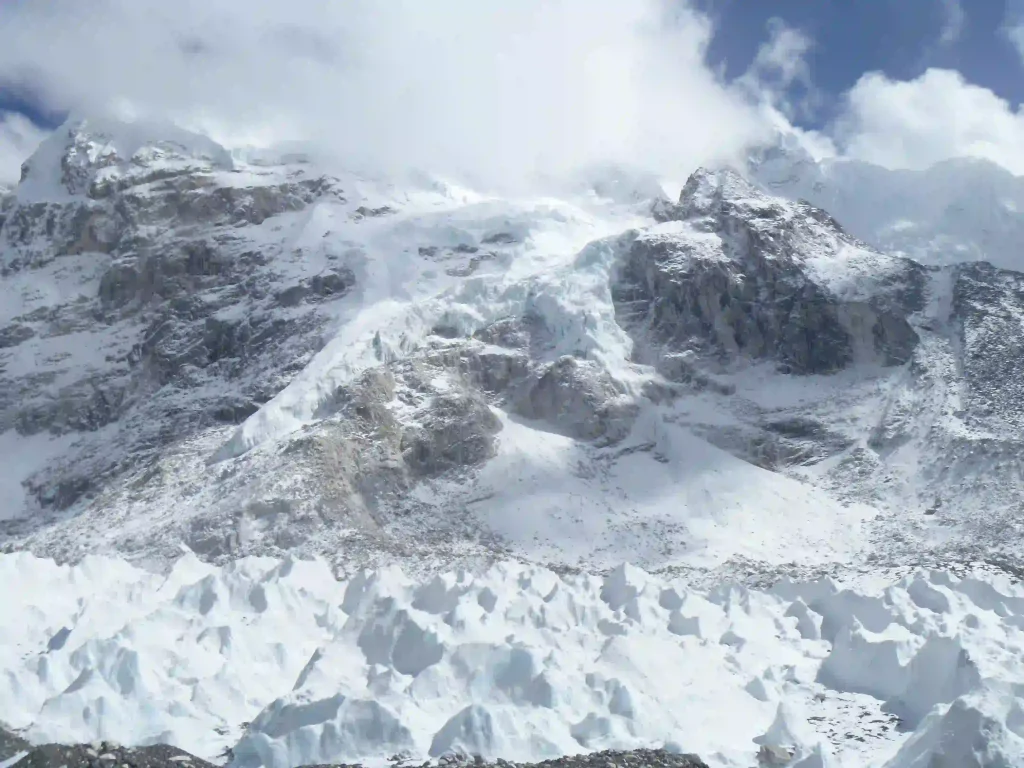
  • Annapurna South (7,219m): Forms a huge rock and ice face across the valley, clearly visible from the Mardi Base Camp.
  • Hiunchuli (6,441m): Located beside Annapurna South, seen clearly from the upper trail of Mardi High Camp.
  • Annapurna III (7,555m): Appears in the distance from higher points on the ridge.
  • Gangapurna (7,455m): Visible on clear days from the higher areas of the trail behind the Annapurna peaks.
  • Mardi Himal (5,587m): The peak the trek is named after, seen above Base Camp itself, though it is not the main summit view.

What should I pack for Mardi Himal Trek?

For the Mardi Himal Trek, pack light but prepare for cold nights, changing weather, and sharp climbs. A 30–40 L backpack is enough if you use a porter, while a 50–60 L backpack may be more suitable if you carry your own gear.

Category Items to Pack Recommended Quantity
Clothing T-shirts 2–3
Trekking pants 2
Thermal base-layer top and bottom 1 set
Fleece jacket 1
Down or insulated jacket 1
Waterproof/windproof jacket 1
Underwear 4–5 pairs
Trekking socks 3–4 pairs
Warm woolen socks 1–2 pairs
Warm hat/beanie 1
Sun hat/cap 1
Buff or neck gaiter 1
Gloves 1 pair
Footwear Waterproof trekking boots 1 pair
Camp shoes/sandals 1 pair
Gaiters 1 pair, optional
Rain & Weather Rain jacket 1
Rain pants 1
Backpack rain cover 1
Waterproof dry bags 2–3
Trekking Gear Trekking poles 1 pair
Headlamp with spare batteries 1
Sunglasses with UV protection 1
Water bottles or hydration bladder 2–3 L capacity
Sleeping bag 1
Quick-dry towel 1
Personal Care Toothbrush and toothpaste 1 each
Biodegradable soap/hand sanitizer 1
Sunscreen (SPF 30–50+) 1
Lip balm with SPF 1
Toilet paper/tissues 1–2 rolls
Personal medications
First Aid Basic first-aid kit 1
Blister treatment/bandages 1 small pack
Pain reliever and basic medicines
Electronics Phone 1
Power bank 1
Charging cables
Universal travel adapter 1
Documents & Money Passport/ID 1
Trekking permits/documents
Travel insurance details 1 copy
Cash in Nepalese rupees Sufficient amount
Optional Items Camera 1
Snacks/energy bars
Book/e-reader 1
Earplugs 1 pair
Small binoculars Optional

Our Latest Blog

Attractions, Tips & Activities. Explore Now!

View All Blog

Plan Your Perfect Adventure

Tell us where you want to go and we’ll take care of the rest.
Get a custom travel plan tailored to your interests and schedule.

Start Planning