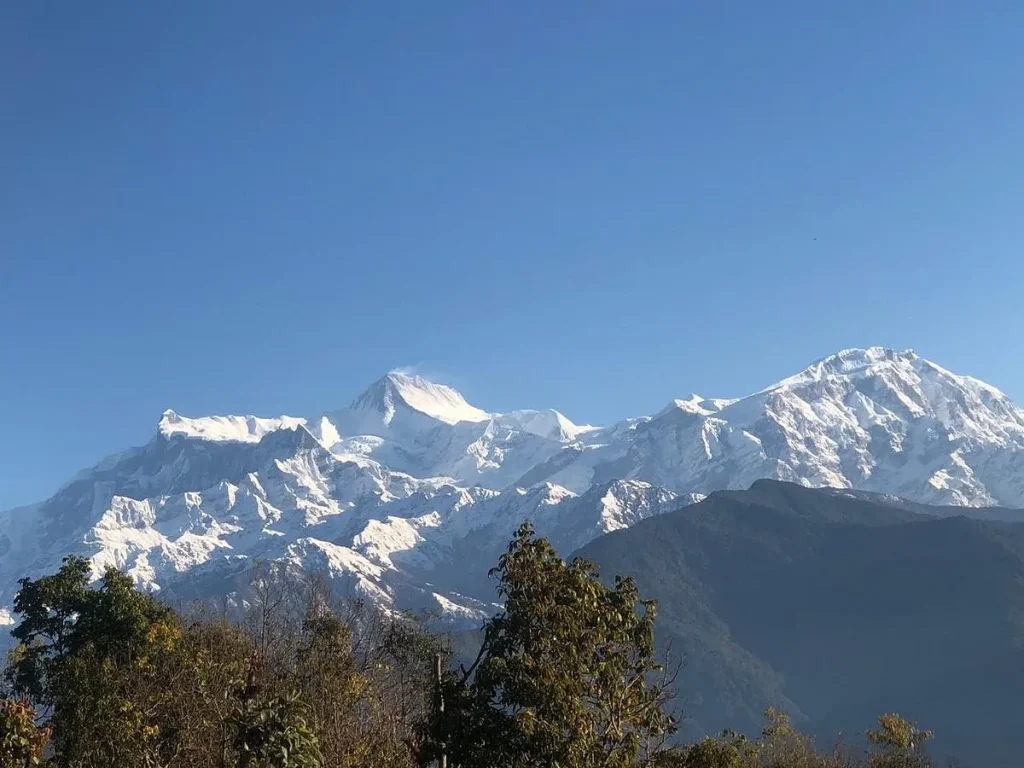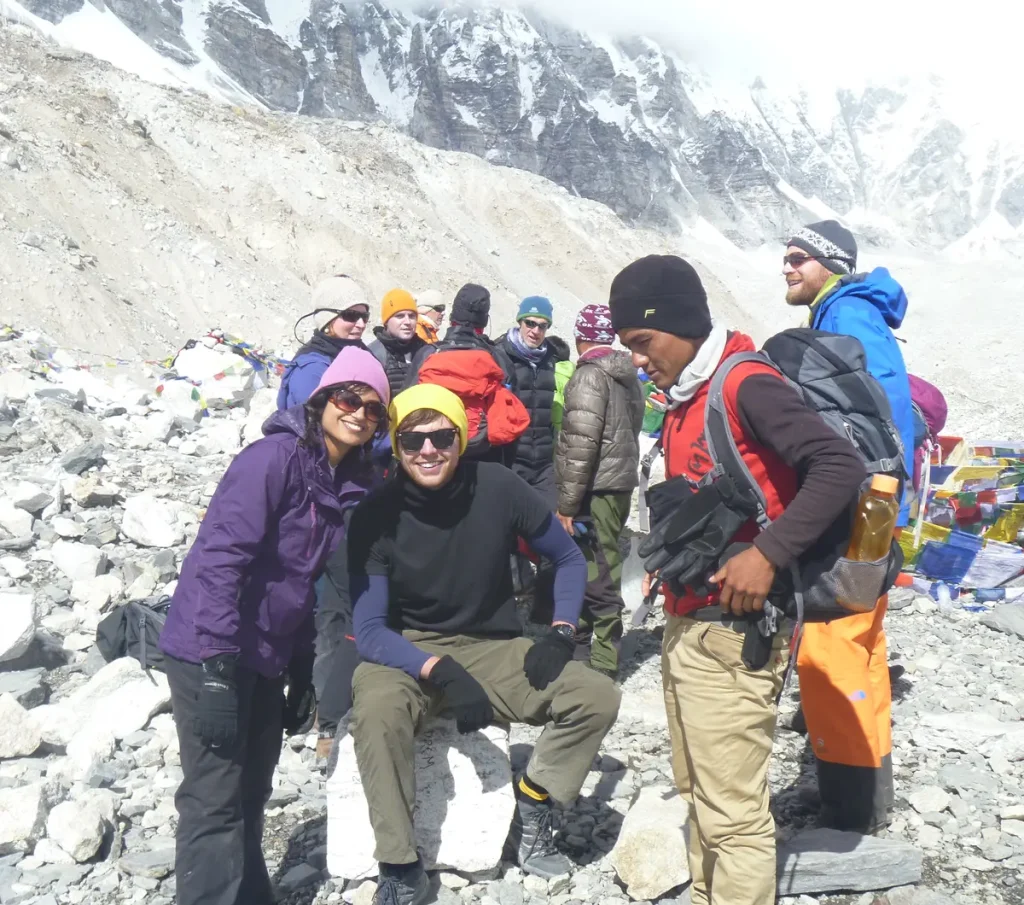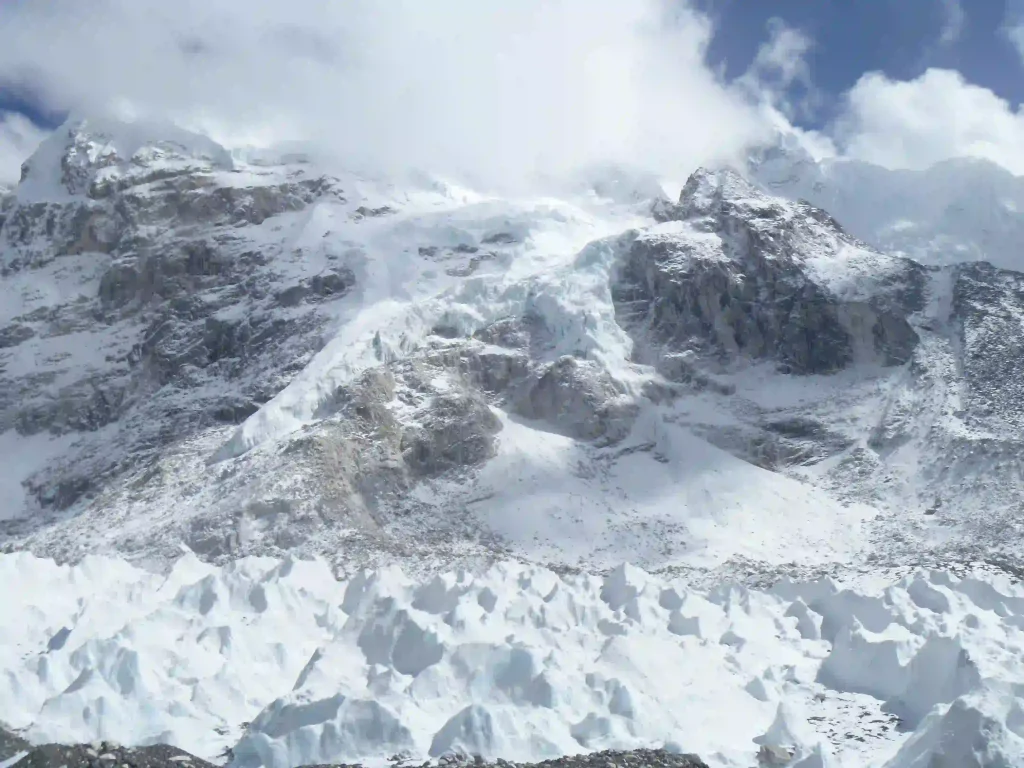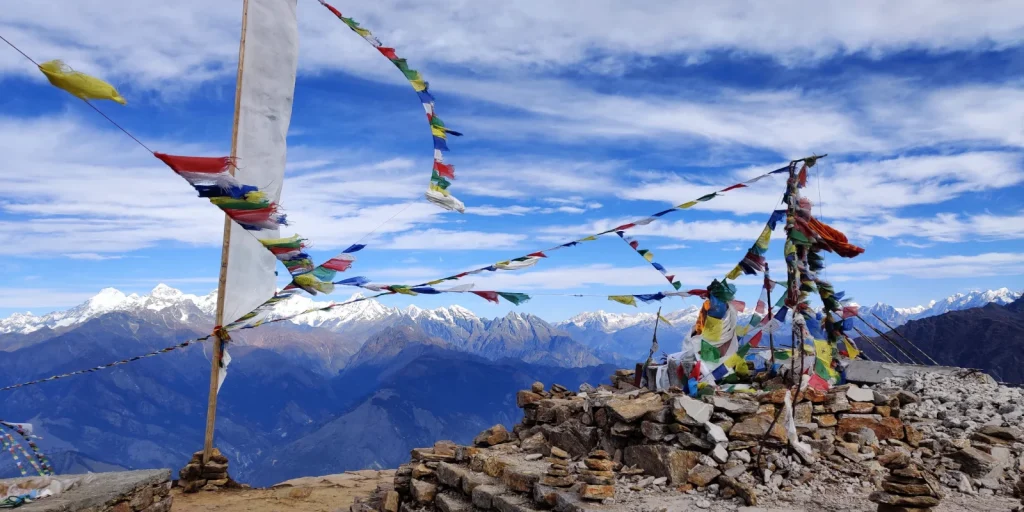

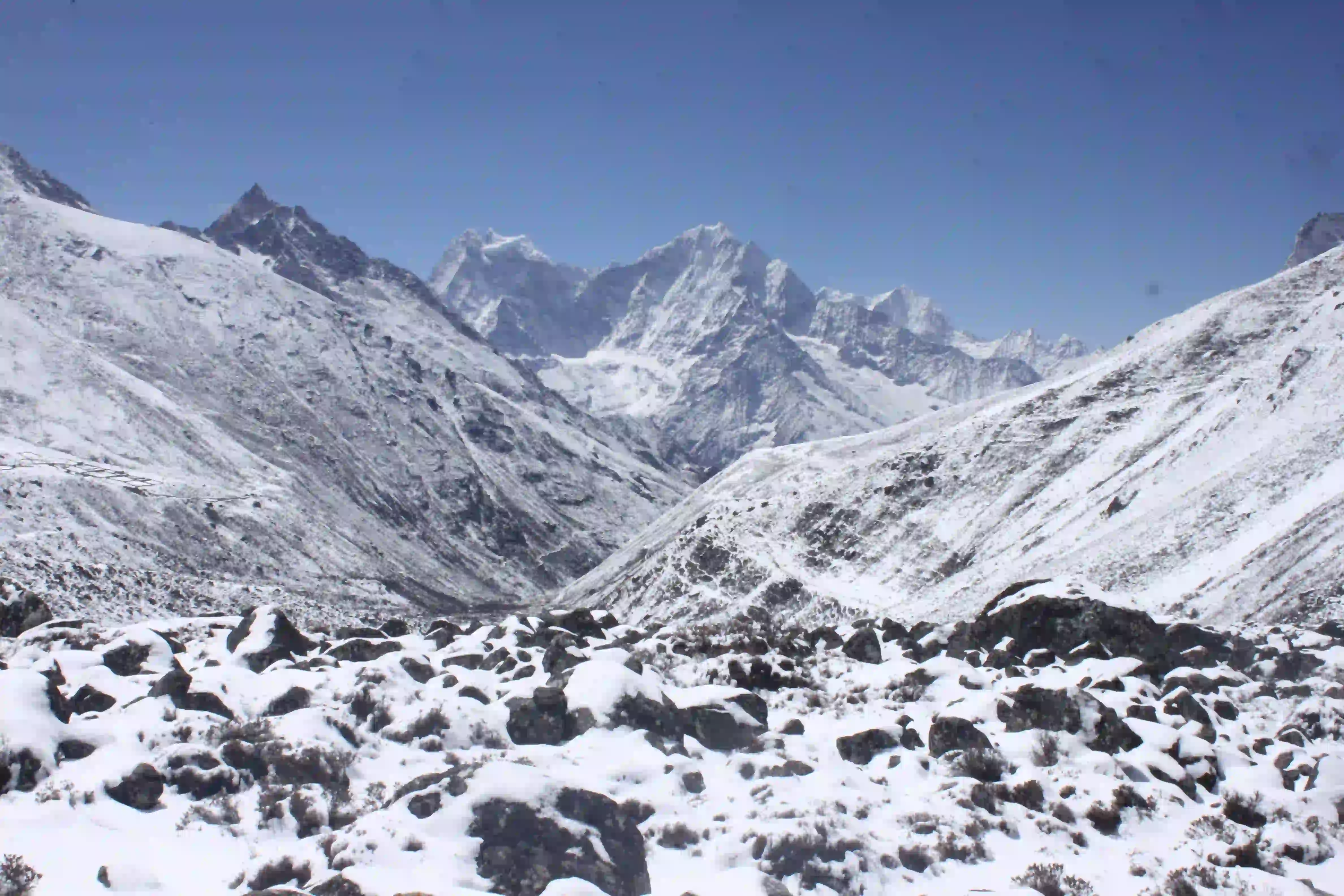
The Everest Base Camp Trek is moderate to challenging, because of its high altitude rather than its distance or geography. Trekkers must walk approximately 130 km round trip over 12–14 days, spending 4–8 hours on the trail each day to reach Everest Base Camp (5,364 m) and Kala Patthar (5,555 m). Although it is tough, many first-time trekkers successfully complete the journey every year.
Can an average person actually complete Everest Base Camp? In most cases, yes. You do not need mountaineering experience, ropes, or climbing equipment to reach Base Camp. However, good preparation, fitness, and acclimatization are essential for handling the effects of high altitude. Here’s a quick Everest Base Camp Trek difficulty rating:
| Factor | Difficulty |
|---|---|
| Distance | Moderate |
| Terrain | Moderate |
| Altitude | High |
| Technical Skill | Low |
| Overall | Moderate to Challenging |
What Makes the Everest Base Camp Trek Difficult?
High altitude, consecutive days of trekking, trail conditions, and weather & temperatures are the factors that affect EBC difficulty. Each of these factors is explained in detail below:
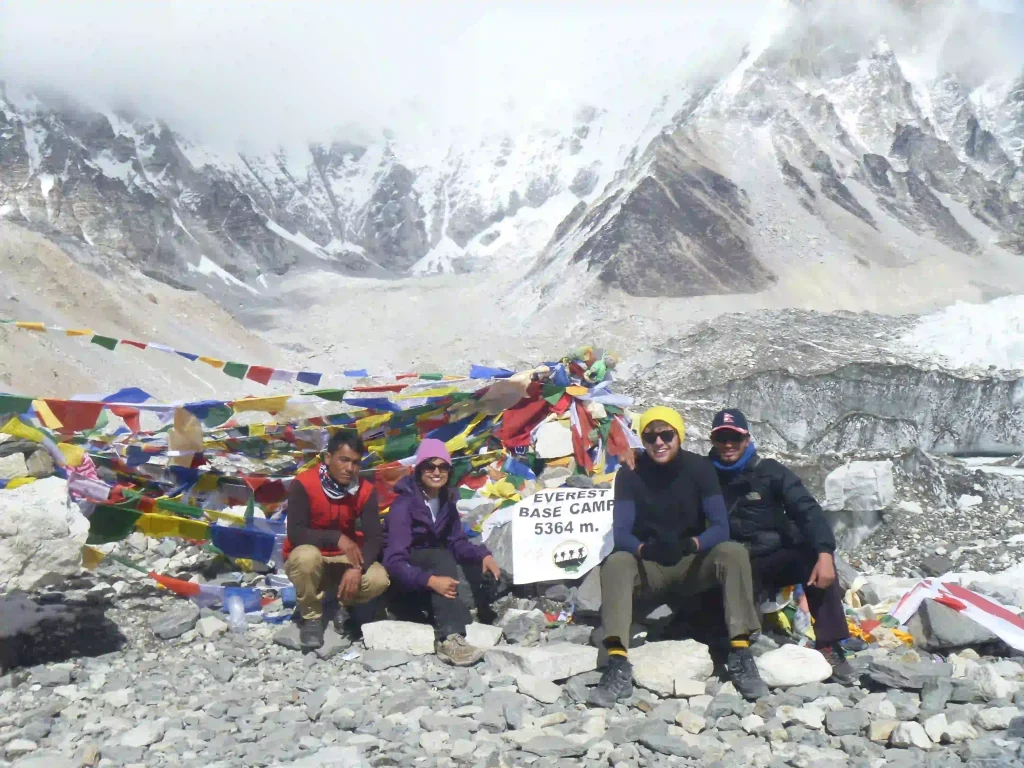
High Altitude up to 5,555 m at Kala Patthar
The biggest challenge on the Everest Base Camp Trek is the high altitude. While the trail itself is manageable for most people, the oxygen level decreases significantly as you climb higher. By the time you reach Everest Base Camp, your body is working with half the oxygen available at sea level.
This reduction in oxygen affects everyone differently, regardless of age or fitness level. Many trekkers experience headaches, poor sleep, dizziness, or loss of appetite as they gain elevation. The higher you go, the slower you become because your heart and lungs must work harder to supply oxygen to your muscles. To reduce fatigue and make the trek easier, some trekkers choose an Everest Base Camp Trek with a helicopter return. Although it costs more, it cuts out the long, tough return hike.
Consecutive Trekking Days
The Everest Base Camp Trek is not a one-day challenge but a test of patience over 12 to 14 days. Even the acclimatization days at Namche Bazaar and Dingboche are not complete rest days, it involves several hours of hiking around Khumbu valley to adjust the body at high altitude. As a result, your energy levels rarely get a full break during the journey.
The difficulty builds slowly as the days pass. Small aches and muscle fatigue that seem minor during the first few days become noticeable by the second week. At the same time, the high altitude can reduce your appetite while your body continues burning large amounts of energy every day. several hours of walking, limited recovery, and increasing fatigue are one of the main reasons trekkers find the EBC trek more challenging.
Steep Climbs, Descents, and Trail Conditions on the Route
The Everest Base Camp Trek is challenging not only because of the altitude but also due to its rough mountain tracks. The first test comes on the climb to Namche Bazaar, where trekkers gain hundreds of meters in elevation after crossing the Hillary suspension bridges. Later, the route to Tengboche becomes even more difficult.
The toughest terrain is saved for the final days of the trek. The morning hike to Kala Patthar follows a rocky, stone-covered path full of ice and snow. If not handled properly, it may cause serious health damage. None of these areas needs technical skills, but they do need stamina and attentive footwork to handle repeated ascents and descents day after day.
Weather and Temperature of Khumbu Region
As you climb above 4,000 m, places such as Dingboche, Lobuche, and Gorak Shep have large temperature swings between day and night. During sunny days, temperatures range from 10°C to 15°C. However, once the sun disappears behind the mountains, temperatures can quickly fall to between -5°C and -20°C.
Strong winds add extra obstacles at higher elevations. Mornings are normal, but afternoon winds are much stronger because the air comes from the valleys below Everest, Lhotse, and Nuptse. Walking into cold headwinds at altitudes above 5,000 m makes breathing difficult and increases fatigue.
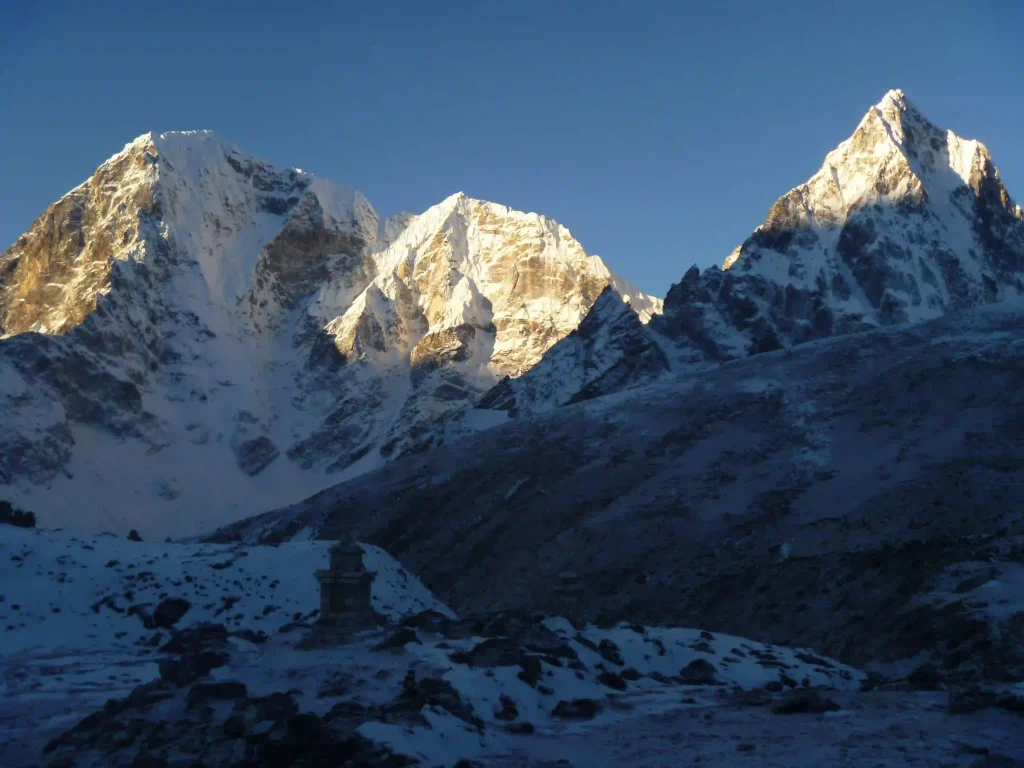
Everest Base Camp Trek Distance, Walking Hours, and Daily Altitude Gain
Below is a breakdown of the daily distance and walking hours for a clearer understanding of EBC difficulty.
| Section | Distance | Walking Time | Difficulty |
|---|---|---|---|
| Lukla–Phakding | 8-9 km | 3–4 hours | Easy |
| Phakding–Namche | 10–11 km | 5-6 hours | Hard |
| Namche–Tengboche | 9–10 km | 5-6 hours | Moderate |
| Tengboche-Dingboche | 10-11 km | 5-6 hours | Moderate |
| Dingboche–Lobuche | 7-8 km | 5-6 hours | Hard |
| Lobuche–EBC–Gorak Shep | 11–12 km | 6-8 hours | Very Hard |
| Kala Patthar Hike | 2 km | 2.5-3 hours | Very Hard |
Everest Base Camp Trek Difficulty Compared to Other Popular Treks
To give you a realistic idea of how difficult the Everest Base Camp (EBC) trek is, let’s compare it with other world-famous trekking routes:
| Trek | Region | Difficulty |
|---|---|---|
| Inca Trail | Peru | Similar |
| Kilimanjaro | Tanzania | Slightly Harder |
| Annapurna Base Camp | Nepal | Easier |
| Tour du Mont Blanc | Europe | Similar |
| Milford Track | New Zealand | Easier |
| Huayhuash Circuit | Peru | Harder |
| Markha Valley Trek | India | Similar |
What Level of Fitness Is Required for the Everest Base Camp Trek?
The Everest Base Camp Trek needs a good overall fitness level rather than athletic ability. Strong cardiovascular fitness, along with leg strength, balance, and hiking stamina are important for this trek. Your muscles and joints must handle thousands of stone steps and 14 consecutive days of trekking with limited recovery time.
Many first-time trekkers assume that being fit in the gym is enough, but Everest Base Camp is more about maintaining long-lasting stamina than quick bursts of energy. People who regularly hike, walk long distances, or participate in stamina-building activities adapt to trekking style more easily than those who focus only on strength training.
Fitness Benchmarks Before Attempting Everest Base Camp
- Jog for 45–60 minutes continuously without stopping to catch your breath.
- Walk at a 10% to 12% incline at a speed of 4.5 km/h (2.8 mph) for 45 minutes.
- Perform 3 sets of 30 repetitions with perfect form and no rest between reps.
- Complete 40 alternating walking lunges (20 per leg) while wearing a 5 kg (11 lbs) backpack.
- Do 30 single-leg calf raises per side to improve ankle strength for rocky terrain.
- Hike a trail covering 15 km with at least 500 m of elevation gain in under 5 hours.
- Focus your training heavily on your weak areas (e.g., add more stair climbing if your legs failed the lunge test).
Altitude Sickness on the Everest Base Camp Trek
Altitude sickness is the biggest challenge trekkers face on the Everest Base Camp Trek. It can affect anyone, regardless of age, fitness level, or previous trekking experience. As the journey reaches above 3,000 m, the limited oxygen supply can slow the body’s adjustment process. As a result, common symptoms such as headaches, dizziness, unusual tiredness, loss of appetite, mild nausea, and difficulty sleeping start to appear.
The good news is that most cases of altitude sickness can be prevented by following a proper itinerary. This is why standard Everest Base Camp itineraries have at least one or two important acclimatization days at Namche Bazaar (3,440 m) and Dingboche (4,410 m). During these days, trekkers hike to a higher elevation and return to sleep at a lower elevation.
The most important rule on the trek is to move slowly and pay attention to your body’s signals. Experienced guides use the phrase “Bistari, Bistari” (slowly, slowly) because rushing is one of the leading causes of altitude-related problems. Staying hydrated, avoiding alcohol, and smoking can also reduce the risk of developing altitude sickness by 15-20 percent.
The Hardest Sections of the Everest Base Camp Trek
The hardest parts of the Everest Base Camp Trek are the climb to Namche Bazaar, the ascent to Tengboche, the journey from Lobuche to Everest Base Camp, and the hike to Kala Patthar. Let’s find out how hard they are.
The Climb to Namche Bazaar
The climb from Phakding to Namche Bazaar is the first truly difficult section of the Everest Base Camp route. After crossing the famous Larja Suspension Bridge (also known as the Hillary Bridge), you will climb around 800 m in elevation on a steep uphill trail to reach Namche Bazaar, which takes 2–3 hours to complete.
What makes this climb challenging is that it occurs early in the trek, before most people have adapted to the increasing altitude. Even fit trekkers find themselves slowing down due to constant climbing and the pressure on their legs and lungs.
The Trek from Dingboche to Lobuche
The trek to Lobuche is another of the most demanding days of the journey because it takes trekkers deeper into the high-altitude environment. The toughest part is the climb to Thukla Pass (4,830 m), where a short uphill takes you to the famous memorial area dedicated to climbers who lost their lives on Mount Everest.
What makes this area even tougher is the altitude and colder conditions. By this stage of the trek, oxygen levels are very low, where even moderate climbs feel much harder. Khumbu winds can further increase fatigue, turning this short trekking day into the most physically difficult part of the route.
Everest Base Camp Day
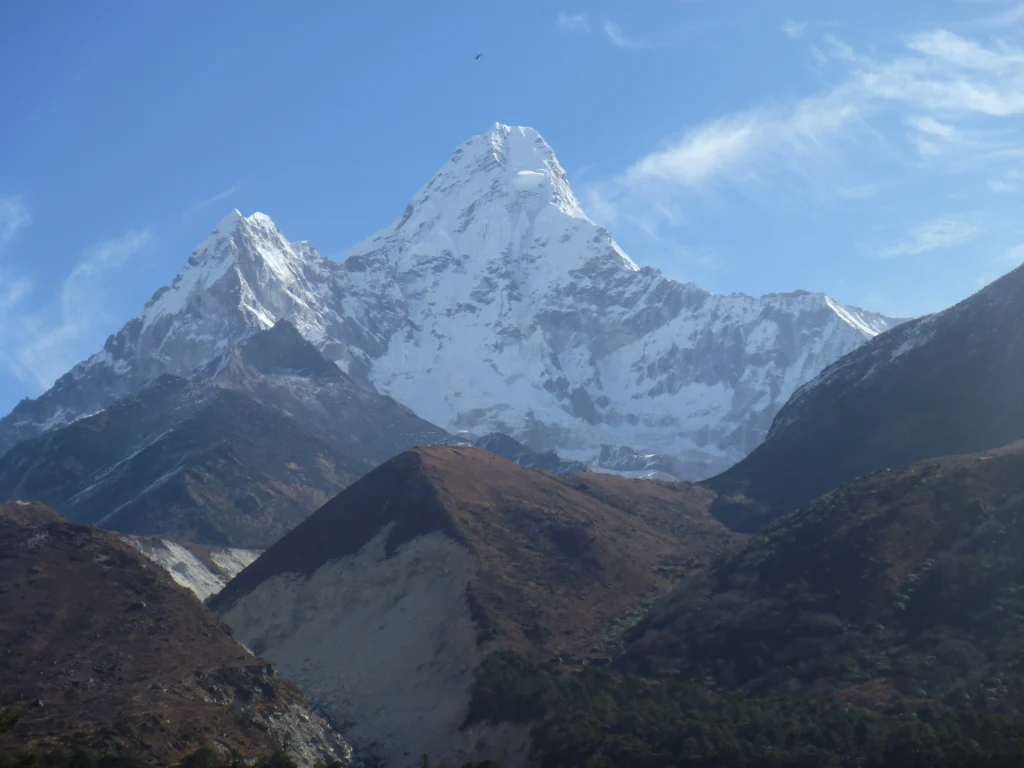
Reaching Base Camp is the most satisfying moment of the trek, but it is also one of the longest days. Trekkers first hike from Lobuche to Gorak Shep, then continue to Everest Base Camp before returning to Gorak Shep for the night. This can add up to 7–8 hours of walking at some of the highest elevations.
The main challenging factor of this day is the geography. Much of the route follows the rocky surface of the Khumbu Glacier. It is covered with loose stones, snow, and glacier moraine. After more than a week of continuous trekking, the altitude, fatigue, and remoteness make Everest Base Camp Day one of the hardest sections of the journey.
Kala Patthar Sunrise Hike
The sunrise hike to Kala Patthar (5,555 m) is the hardest part of the entire Everest Base Camp Trek. Trekkers begin the journey before dawn at 4:00 AM in freezing temperatures with headlamps to climb an icy trail that takes them to one of the best viewpoints of Mount Everest.
What makes this hike so difficult is the altitude, cold weather, and steep grounds. At this elevation, available oxygen is roughly half of what it is at sea level, while morning temperatures drop to -15°C to -20°C. Many trekkers need to take regular breaks to catch their breath while making their way to the summit.
Who Shouldn’t Attempt the Everest Base Camp Trek?
The Everest Base Camp Trek is achievable for many people, but it is not suitable for everyone. Here are the types of people who should think twice before attempting it:
- People with serious heart conditions – High altitude forces the heart to work harder, which increases the risk of cardiac problems.
- Severe asthma or breathing disorders – Cold, dry air and trail dust can trigger breathing difficulties.
- COPD or lung diseases – Reduced oxygen levels can overwhelm already weak lung function.
- Advanced knee, hip, or joint problems – Long descents and stone steps can worsen pain and limit mobility.
- Unstable ankles or poor balance – Rocky trails increase the risk of falls and injuries.
- Pregnant women – High-altitude atmosphere can pose risks for both mother and baby.
- History of severe altitude sickness (HAPE/HACE) – Previous serious reactions to altitude may indicate a higher risk on this trek.
- People unable to adapt to basic mountain conditions – Limited facilities, cold nights, and simple food can make the experience extremely difficult both physically and mentally.
Who Is Well-Suited for the Everest Base Camp Trek
- Slow and steady walkers who can maintain a comfortable speed without rushing or pushing too hard
- People with experience in stamina-building activities like long walks, hiking, cycling, running, or swimming
- Trekkers who can walk uphill while still speaking comfortably
- Travelers with strong mental adaptability who can handle basic facilities, cold nights, and simple mountain accommodation
- Individuals willing to train before the trek through hiking, stair climbing, or incline walking
- Disciplined trekkers who can follow guide instructions and adjust to weather delays
- Respectful travelers who are comfortable walking alongside porters, yaks, and other trekkers
How a Guided Everest Base Camp Trek Makes the Journey Easier and Safer
A guided Everest Base Camp Trek reduces both physical effort and mental stress because a professional team handles most of the planning and safety decisions. With a trusted operator like Snow View Trek, trekkers are supported from arrival to departure, including route planning, permits, accommodation, and daily coordination. This means you can focus fully on adjusting to altitude, instead of worrying about logistics, trail navigation, and flight schedules.
One of the biggest advantages is the support of guides and porters during the trek. Porters carry most of your heavy load, around 25 kg, so that you can walk with just a light daypack of essentials like water and a jacket. Experienced guides also monitor your health daily, like oxygen levels at higher elevations, and identify early signs of altitude sickness before it becomes serious.
Is Everest Base Camp Harder in Certain Seasons?
Yes, the Everest Base Camp trek is harder in winter and monsoon seasons. The best times for the Everest Base Camp Trek are spring and autumn. The difficulty level of the trek changes depending on the time of year you choose to visit. The table below provides a clear overview of seasonal challenges.
| Season | Difficulty Rating | Environmental Challenges |
| Spring (March-May) | Moderate (6/10) | Packed trekking routes, full teahouses, and afternoon mist |
| Autumn (September-November) | Moderate (6/10) | Cold nights at altitude, heavily congested paths, teahouse scarcity |
| Winter (December -February) | Extreme (9/10) | Sub-zero deep freeze, black ice, closed teahouses, blocked high passes |
| Monsoon (June-August) | Strenuous (8/10) | Landslide risks, mud, leeches, and flight cancellations. |
What Makes EBC Different From Indian Himalayan Treks?
While both the EBC trek of Nepal and Indian Himalayan treks (like Kedarkantha, Roopkund, Rupin Pass, or Bali Pass) reveal the world’s highest mountain range, they offer different adventure styles. On the EBC route, trekkers stay in teahouses with beds, hot meals, and basic facilities every night, whereas many popular Indian Himalayan treks rely heavily on tent camping.
The biggest difference, however, is the amount of time spent at high altitude. Many Indian Himalayan treks reach a high point and then descend within a few days, but the Everest Base Camp Trek keeps trekkers above 4,000 m for 3-4 days. This prolonged stay in low-oxygen environments makes altitude a much bigger challenge than on most Indian trekking routes.
Is Everest Base Camp Trek Hard?
Understanding what the trek actually involves removes much of the uncertainty. The Everest Base Camp trek is hard, but it is achievable for anyone who respects the altitude, sticks to a structured training plan, and moves at a conservative speed.
If you are ready to test your boundaries on the roof of the world, do not leave your safety to chance. Partnering with an experienced team means you have certified guides monitoring your health every step of the way. Discover how you can join a managed expedition by exploring the customized itineraries offered by Snow View Trek.
Frequently Asked Questions About Everest Base Camp Trek Difficulty
Is Everest Base Camp Trek hard for beginners?
What is the hardest day on the Everest Base Camp trek?
Is altitude sickness guaranteed on the Everest Base Camp trek?
Can I do Everest Base Camp without previous trekking experience?
When is Everest Base Camp trek hardest?
How many acclimatization days are needed for Everest Base Camp?
Is it safe to trek to Everest Base Camp?
What percentage of trekkers successfully reach Everest Base Camp?