Multiple rotations in mountaineering are a common practice during high-altitude expeditions such as Himlung Himal. Climbers will repeatedly climb up to higher camps and descend to lower camps or base camp in rotation. They will move up and down the mountain in cycles rather than climb straight to the summit. The rotation plan can vary slightly depending on the expedition team. Having said that, take a look at the standard rotation pattern on Himlung Himal:
Rotation 1:
Route: Base Camp (4,850m) → Camp I (5,400m) → descend to Base Camp (4,850m)
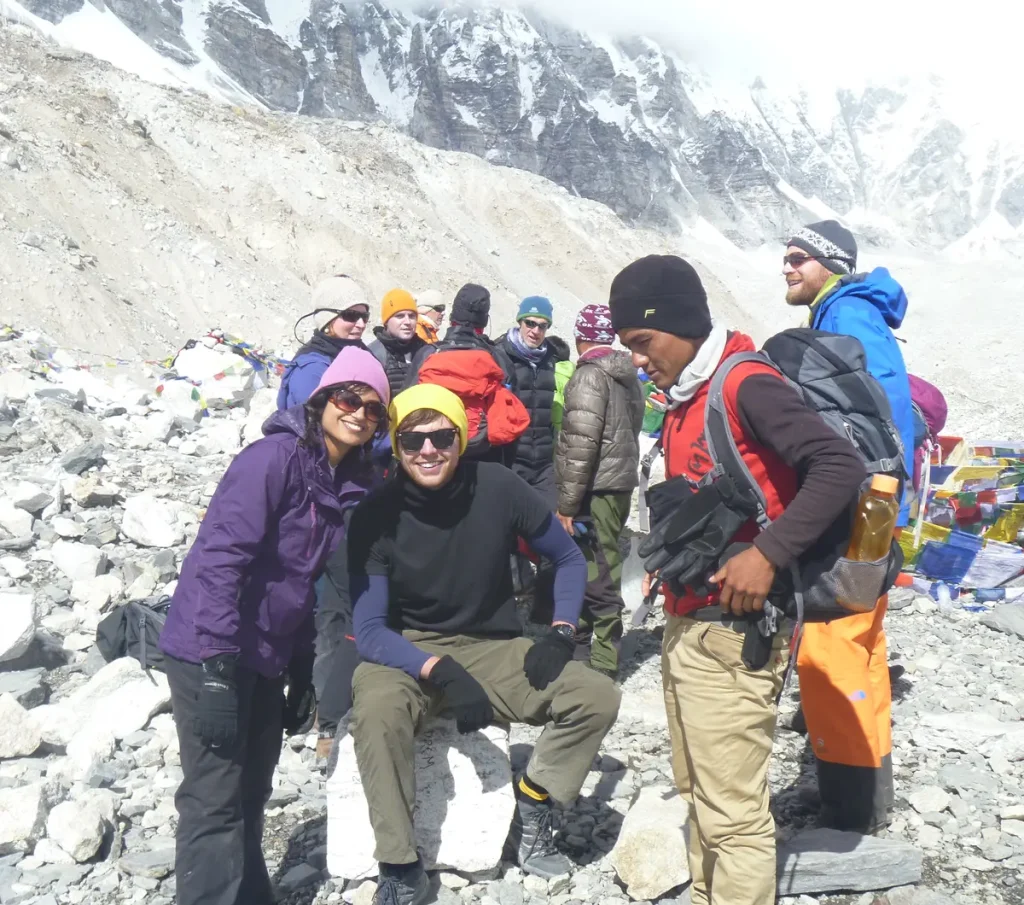
The climbing route starts from Himlung Base Camp. It is the main resting and recovery zone during the expedition. On this rotation, you will get your first exposure to the high altitude. From here, your high-altitude adaptation begins. It is a short climb from the base camp to Camp I, while carrying a light load. Since it is your first time at such a high altitude, you may feel mild symptoms of altitude sickness, such as headache and fatigue.
Rotation 2:
Route: Base Camp (4,850m) → Camp I (5,400m)/ sleep → Camp II (6,000m) → return to Camp I (5,400m)/ sleep → descend to Base Camp (4,850m)
On rotation 2, you will climb up to Camp II and introduce your body to 6,000m altitude. You will first climb from base camp to Camp I and sleep there. Then, you will move to Camp II but return to Camp I to sleep. Then, you will descend back to base camp. This method follows the “climb high, sleep low” principle. This rotation helps in practicing climbing techniques.
Rotation 3:
Route: Base Camp (4,850m) → Camp I (5,400m) → Camp II (6,000m)/ Sleep → possibly touch Camp III (6,300m) → descend to Camp II (6,000m)/ sleep
On rotation 3, you will move from base camp to Camp I, Camp II, and, if the condition permits, to Camp III. During this period, you will spend a few nights at Camp II rather than Camp I. It is a major acclimatization phase and also the hardest rotation, physically and mentally. You will be introduced to a more extreme altitude, up to 6,300m. At the end of the rotation, you will descend to base camp.
Rest Period:
After completing the hardest rotation, you will spend a few days as a rest period at the Himlung Base Camp. It allows you to recover from several days of climbing. During this period, you will also keep yourself hydrated and eat a nutritious diet. Similarly, your guide will monitor the weather and prepare for the final summit.
Final Summit Rotation:
Route: Base Camp (4,850m) → Camp I (5,400m) → Camp II (6,000m) → Camp III (6,300m) → Summit (7,126m) → descend to Base Camp (4,850m)
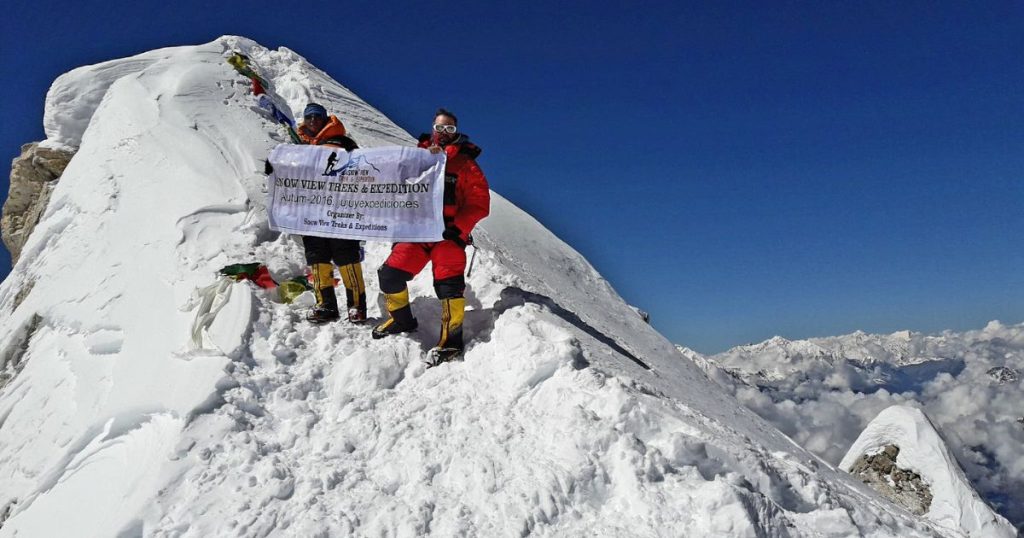
For the final summit, you will start early and move faster. The summit window is usually short, and the weather can change rapidly. You will leave base camp for Camp I, then follow the route to Camp II and Camp III. Finally, you will ascend to the summit. You will spend only a short time at the top of Himlung due to extreme conditions. Then you will descend the same route you ascended. Usually, the expedition team descends to Camp II or Camp I on the same day. At the end of the rotation, you will descend to base camp.