

Most trekkers choose the Everest Base Camp Trek with Helicopter Return when they have limited time, want extra comfort, or want to skip the lengthy trek back. A standard Everest Base Camp trek takes 14 days, while the helicopter return option reduces the journey to 12 days by flying back from the Gorakshep after reaching Everest Base Camp. Both options follow the same route to EBC and reach the same maximum trekking altitude of approximately 5,644 m at Kala Patthar.
The real question is not whether you can reach Everest Base Camp; both trips do so successfully. The real difference comes after the achievement. The classic trek returns on foot through the Khumbu Valley, whereas the helicopter return replaces several days of downhill walking with a flight over the Mahalangur Himalayas.
This guide compares the two options based on the things that matter most: cost, trip length, difficulty, scenery, altitude, comfort, and overall experience. For most people, the right choice depends more on their available time, comfort, and the budget they are willing to invest in the adventure.
Which Everest Base Camp Trek Option Is Right for You?
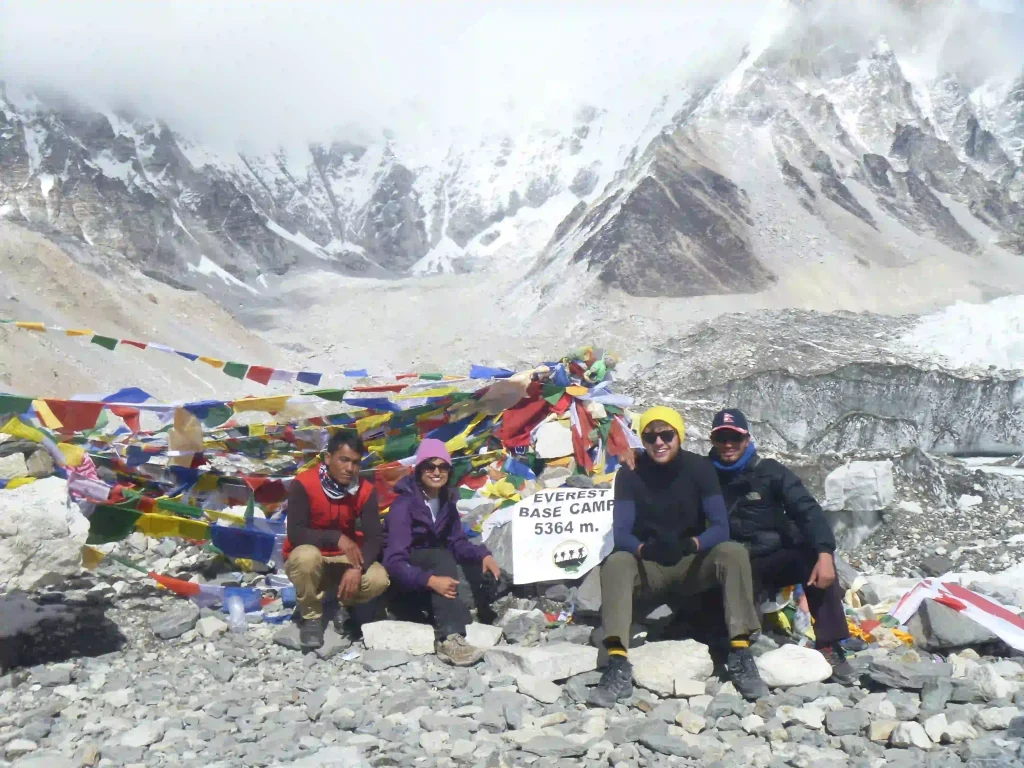
If your priority is maximizing trekking time and keeping costs lower, the standard 14-day Everest Base Camp Trek is the better choice. If you have limited vacation time and want to avoid 2-3 days of downhill walking, the 12-day Everest Base Camp Trek with Helicopter Return offers the same Everest experience in a shorter timeframe. Both itineraries reach Everest Base Camp (5,364 m) and Kala Patthar (5,555 m) before returning.
The helicopter-return option flies from the Gorakshep area to Lukla, where you spend the night before taking a flight to Kathmandu the next day. This makes the trip more expensive, but it saves time and adds a beautiful aerial view of the Everest region to your photo album. Here’s a quick comparison of the two options:
| Factor | Standard EBC Trek | EBC Helicopter Return |
|---|---|---|
| Duration | 14 days | 12 days |
| Price | USD 1,470 | USD 2,450 |
| Return route | Trek from Gorakshep to Pheriche to Namche to Lukla | Fly from Gorakshep to Lukla to Kathmandu |
| Physical demand | Higher | Lower |
| Time efficiency | Needs more travel days | Saves 2 trekking days |
| Scenic value | More village, forest, trail, and Khumbu geography | Spectacular aerial Himalayan views |
| Best for | Trekkers looking for a complete EBC experience | Travelers with limited time or those wanting extra comfort |
Comparison Table (cost, duration, difficulty, scenery)
| Feature | EBC Trek | EBC Helicopter Return |
|---|---|---|
| Total days | 14 days | 12 days |
| Trekking days | 10 days | 8 days |
| Flight Days | 2 days | 3 days |
| Total walking distance | 110-115 km | 70-72 km |
| Average daily walking time | 5–7 hours | 5–7 hours |
| Accommodation | Teahouses | Teahouses |
| Meals | Breakfast, lunch, and dinner | Breakfast, lunch, and dinner |
| Return method | Trek back to Lukla and fly to Kathmandu | Helicopter flight from the Gorakshep/Kala Patthar area |
| Difficulty | Moderate to Challenging | Moderate |
| Price | USD 1,470 | USD 2,450 |
| Best suited for | Trekkers seeking the full Everest experience | Travelers with limited time or larger budgets |

Everest Base Camp Trek
USD 1,470
Everest Base Camp Trek With Helicopter Return
USD 2,450
Everest Base Camp Trek vs Helicopter Return Cost Comparison
The standard Everest Base Camp Trek costs around USD 1,470, while the Everest Base Camp Trek with Helicopter Return costs approximately USD 2,450. This means the helicopter-return option is about USD 980 more expensive.
Both trips follow the same route to Everest Base Camp and Kala Patthar, include similar accommodation and meals, and provide the same trekking experience on the way up. Whether the extra cost is worthwhile depends on how much you value time, convenience, and a shorter overall itinerary.
Why Does the Helicopter Return Cost More?
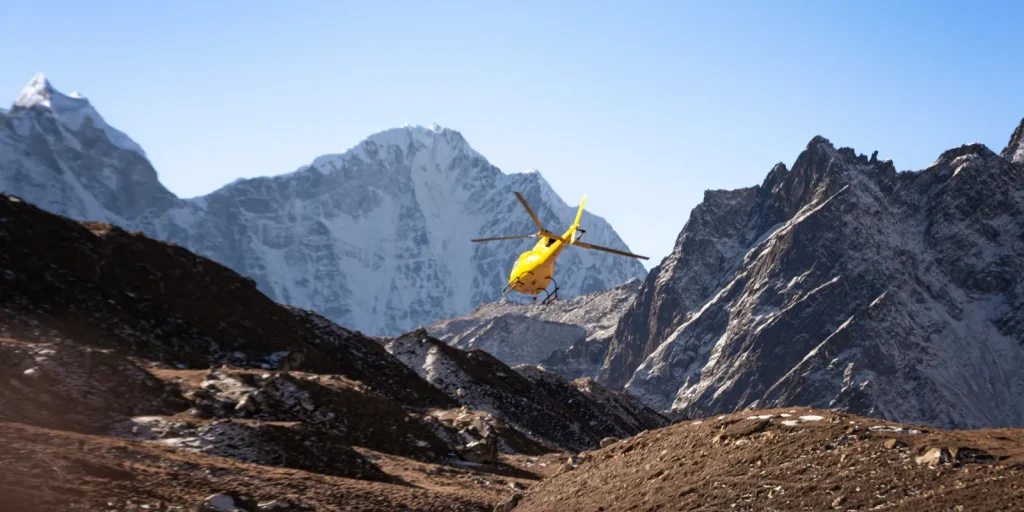
The higher price of the helicopter-return trek is due to the cost of operating helicopters in the remote Everest region. Flying in the Khumbu Valley needs special aircraft, experienced mountain pilots, strict safety rules, and favorable weather conditions, all of which increase operational expenses.
Who gets the most value from paying extra?
- Travelers with limited vacation time who want to explore Everest Base Camp without using additional trekking days.
- Older trekkers who find several days of downhill hiking hard on their legs and joints.
- Families looking for a more comfortable and time-efficient Everest experience.
- Travelers looking to avoid delays and disruptions to regular fixed-wing flights to Lukla.
Everest Base Camp Trek vs Helicopter Return Itinerary Comparison
Both itineraries follow the same route through the Khumbu region and include the same acclimatization stops, villages, and landmarks. The main difference comes after reaching the highest points of the trek: the standard itinerary returns on foot, while the helicopter-return option flies out from the Gorakshep area.
The table below shows where the two itineraries are the same and where they begin to differ.
| Stage | Standard EBC Trek | EBC Helicopter Return |
|---|---|---|
| Kathmandu–Lukla | Fly to Lukla and start the trek | Fly to Lukla and start the trek |
| Namche | Trek and acclimatization day | Trek and acclimatization day |
| Tengboche | Overnight stop during ascent | Overnight stop during ascent |
| Dingboche | Overnight stop and acclimatization | Overnight stop |
| Lobuche | Overnight stop before EBC | Overnight stop before EBC |
| EBC | Reach Everest Base Camp (5,364 m) | Reach Everest Base Camp (5,364 m) |
| Kala Patthar | Sunrise hike to Kala Patthar (5,644 m) | Sunrise hike to Kala Patthar (5,644 m) |
| Return phase | Trek back via Pheriche, Namche, and Lukla | Helicopter flight from the Gorakshep to Lukla and Kathmandu |
| Kathmandu arrival | After completing the return trek and Lukla flight | The next day after the helicopter flight from Lukla. |
EBC Trek vs Helicopter Return Difficulty Comparison
The Everest Base Camp Trek with Helicopter Return is slightly easier than the standard Everest Base Camp Trek. Both trips need the same climb to Base Camp and Kala Patthar, so the altitude challenge is identical. However, the helicopter-return option removes several days of downhill trekking, making the overall journey less exhausting and reducing the build-up of fatigue.
Is the EBC Helicopter Return Easier Than the Standard Trek?
Yes, but only after you reach Everest Base Camp. The ascent, acclimatization days, and high-altitude areas are almost exactly the same on both itineraries. You still need the fitness and patience required to reach Everest Base Camp and Kala Patthar.
The helicopter return becomes easier during the final stage of the trip. By replacing several descent days with a flight back to Kathmandu, it reduces physical burden, energy drain, shortens recovery time, and reduces wear and tear on the knees and ankles.
Altitude Profile Comparison Between Both Options
| Metric | EBC Trek | Heli Return |
|---|---|---|
| Highest sleeping altitude | Gorakshep (5,164 m) | Gorakshep (5,164 m) |
| Highest point | Kala Patthar (5,644 m) | Kala Patthar (5,644 m) |
| Acclimatization days | 1 (Namche Bazaar) | 2 (Namche Bazaar and Dingboche) |
| Total days above 4,000m | 3 days | 3 days |
| Altitude Sickness Risk | Similar | Similar |

Awesome guiding in Sagarmatha National Park


SnowView – Jewel in the land of mountains


EBC Trek vs EBC Helicopter Return Scenery
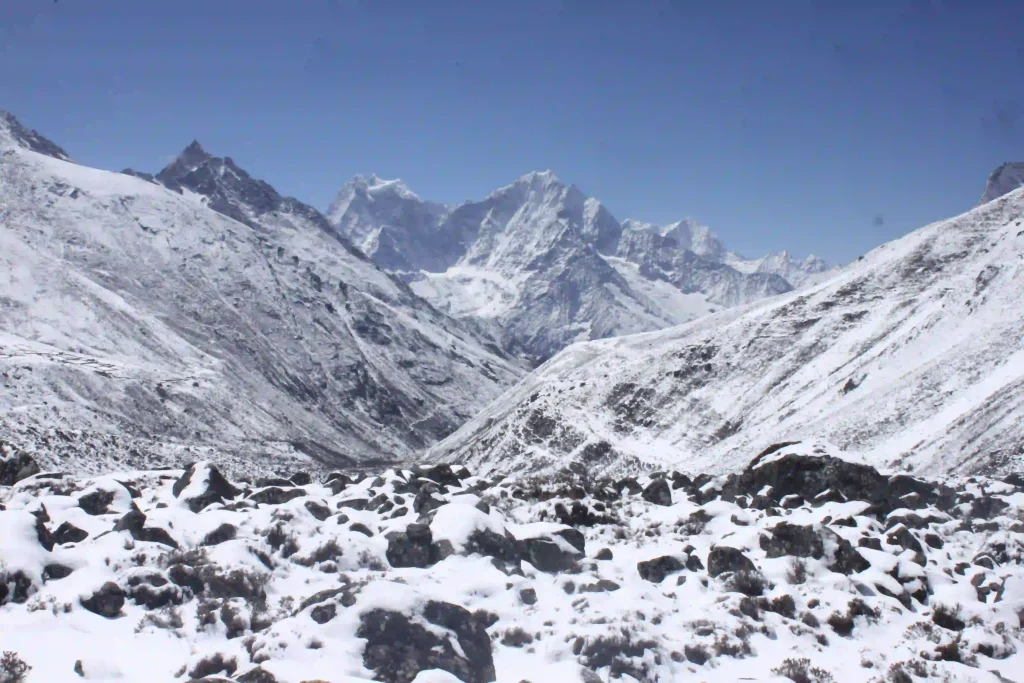
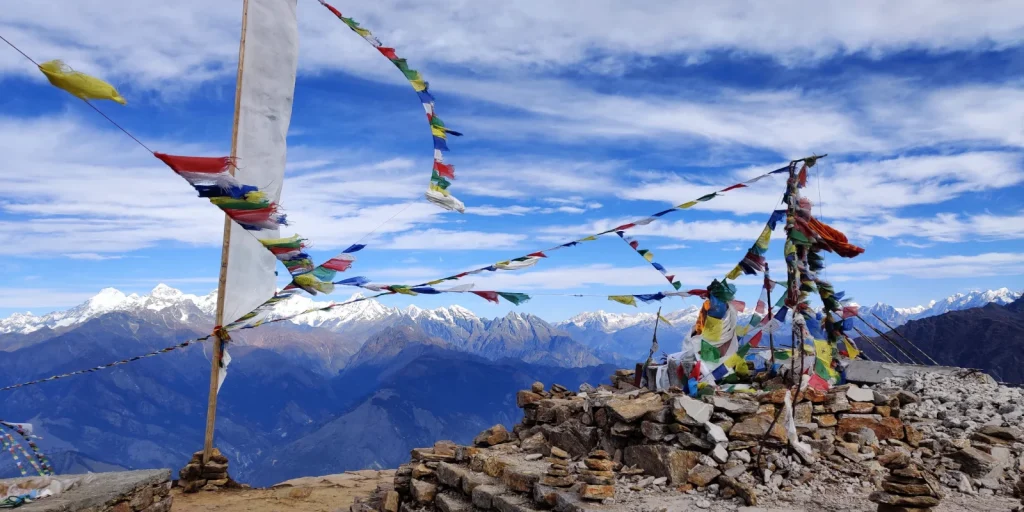
Both options highlight the beautiful geography of the Everest region, but they present it in different ways. The standard trek lets you experience the scenery at ground level, while the helicopter return reveals the same mountains, glaciers, and valleys from above. There’s no right or wrong choice; both show the beauty of the Khumbu region from a different angle.
What You Experience on Foot
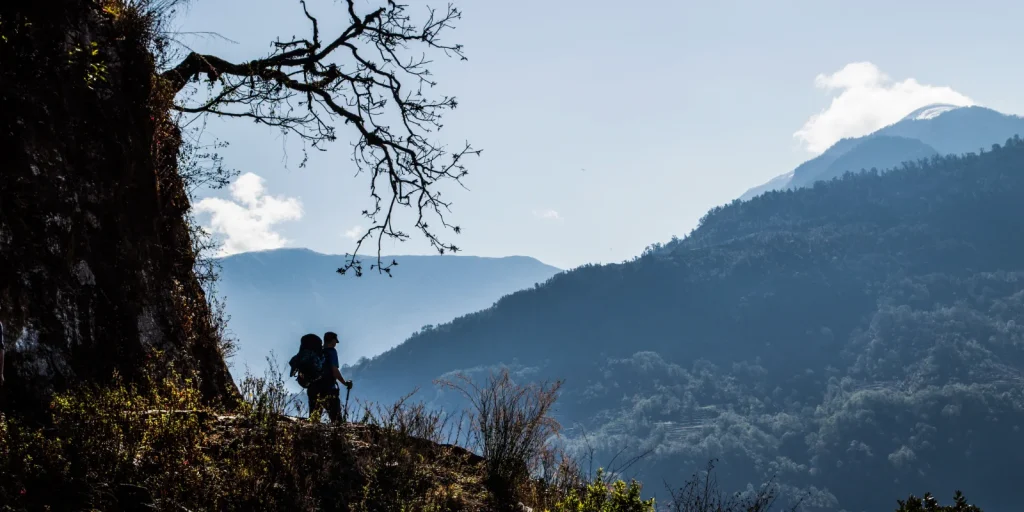
Walking in the Khumbu region is a completely different experience. You’ll pass Sherpa villages, stay in local normal tea houses, explore the atmosphere of Namche Bazaar, and visit the historic Tengboche Monastery surrounded by Mount Ama Dablam views.
The scenery also changes as you trek back down from Gorakshep. Tengboche Monastery appears on a hilltop, the beautiful Imja Khola Valley opens up before you, and the trail you climbed earlier can be seen far below. These views often go unnoticed on the ascent, which makes the return trek feel like a completely new journey.
What Helicopter Return Adds
The helicopter-return option provides something the standard trek cannot: an aerial view of the Everest region. After reaching Everest Base Camp and Kala Patthar, you leave the mountains with a completely different perspective of the landscape you just crossed on foot.
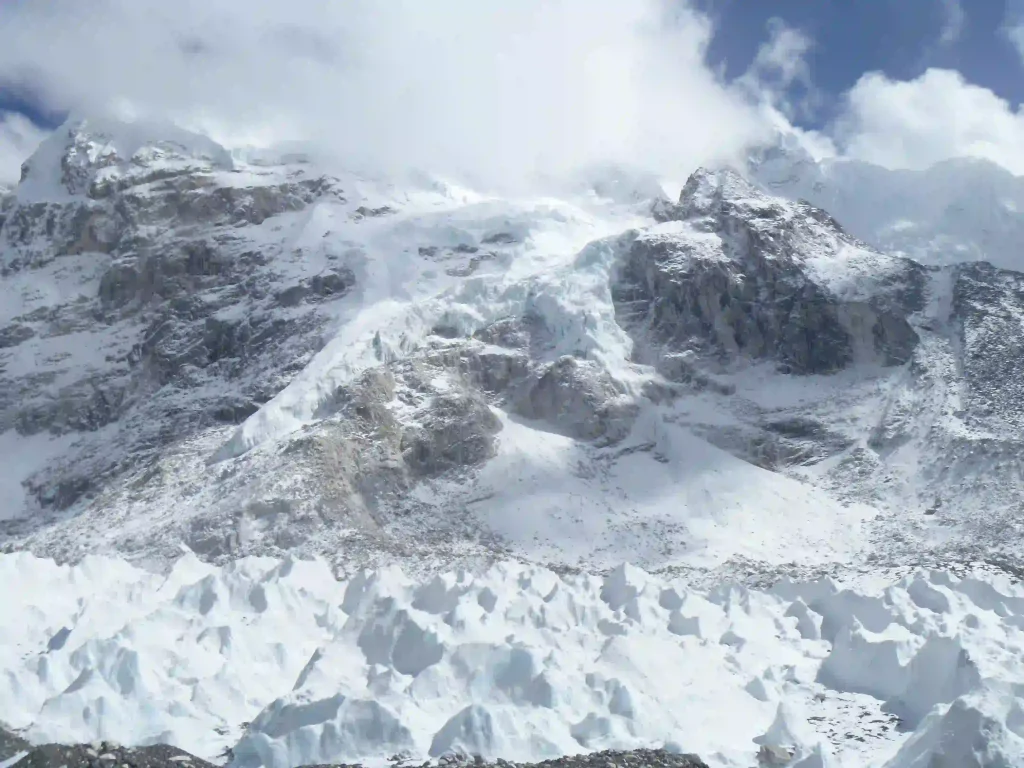
From the air, you can see the Khumbu and Ngozumpa Glaciers, Dudh Koshi and Imja Khola valleys, and Himalayan peaks such as Mount Everest, Lhotse, Nuptse, Ama Dablam, and Pumori. Many trekkers consider the helicopter flight one of the most memorable parts of the entire journey.
Time Commitment for EBC 14 Days vs 12 Days
Both itineraries have the same ascent, acclimatization days, and visits to Everest Base Camp and Kala Patthar. The time savings come from replacing several descent days with a helicopter flight back to Kathmandu.
For many international travelers, those two days can make a huge difference. The helicopter-return option is popular among people with limited annual leave, fixed work schedules, or shorter holiday. The standard trek, however, offers more time to enjoy the complete journey and is the budget-friendly choice. Quick recommendation:
| Choose the EBC Helicopter Return if: | Choose the Standard EBC Trek if: |
| You have less than two weeks available | You enjoy the full trekking journey |
| You want to maximize your time efficiency | Budget matters more than speed |
| You prefer a shorter overall itinerary | You want to complete the entire route on foot |
| You have a fixed international travel schedule | You have enough time to enjoy the full 14-day experience |
Best Time for the EBC Trek and Helicopter Return Trek
The best time for both the classic Everest Base Camp (EBC) Trek and the EBC Helicopter Return Trek is during spring (March to May) and autumn (October to November).
While a standard trekker can sometimes continue their journey despite clouds or light rain, helicopter tours are totally dependent on aviation visibility. Therefore, choosing the right season is even more important if you plan to fly. Let’s take a look at the table below to understand this more clearly.
| Season | Standard EBC Trek | Choice | EBC Trek with Helicopter Return | Choice |
| Autumn (Oct – Nov) | Dry, stable trails, cool daytime temperatures. | Best Choice | 95%+ flight success rate, sharpest aerial photography of the peaks | Best Choice |
| Spring (Mar-May) | Warmer weather, blooming flowers, and active climbing camps. | Good Choice | 90% flight success rate, beautiful views of the Everest tent-city from above | Good Choice |
| Winter (Dec-Feb) | Freezing temperatures, heavy trail snow, and closed teahouses at high-altitude | Challenging | High-altitude winds can ground flights, freeze cabin air, and create dangerous landing conditions. | High Risk |
| Monsoon (Jun-Sept) | Slippery, muddy trails with leeches, consistent rain, and landslides risk. | Poor Choice | Extremely high flight cancellation risk, thick fog, and low clouds | Do Not Attempt |
Choosing Between the Standard Trek and Helicopter Return
The best choice depends on your budget, available time, comfort preferences, and the kind of Everest experience you want.
| If you are… | Choose |
|---|---|
| First-time Himalayan trekker | Standard EBC Trek |
| Budget-focused traveler | Standard EBC Trek |
| Short on vacation time | EBC Helicopter Return |
| Family traveler | EBC Helicopter Return |
| Experienced trekker | Standard EBC Trek |
| Photographer | EBC Helicopter Return (for both ground and aerial perspectives) |
| Older traveler | EBC Helicopter Return |
| Luxury-focused traveler | EBC Helicopter Return |
Why Choose Snow View Trek for Your Everest Base Camp Trek
A successful Everest Base Camp trek depends on good planning as much as physical preparation. Snow View Trek presents its itineraries with complete route information, altitude data, and clear trip inclusions. Here’s what we offer:
- Detailed daily altitude information with main elevations listed throughout the itinerary
- Fully maintained acclimatization schedule at Namche Bazaar and Dingboche to support altitude adaptation
- Clear daily trekking durations that outline approximate walking hours between destinations for better trip planning
- We have Multiple Everest itinerary options, including both the standard Everest Base Camp Trek and the helicopter-return one
- Step-by-step route guidance covering main landmarks, villages, monasteries, suspension bridges, and glacier viewpoints on the trail
- Clear inclusion and exclusion lists for travelers to understand what is covered before booking
- Completed flight and transportation information regarding domestic flight arrangements and trekking logistics
EBC Trek vs EBC Helicopter Return Final Verdict
The choice between these two options fully depends on your travel goals, budget, and personal preferences. Choose the standard 14-day trek if you prefer a traditional foot journey and choose helicopter return if you have a strict vacation schedule or want to protect your knees from 40 km of downhill walking.
Whether you prefer completing the entire trek on foot or returning by helicopter after reaching Base Camp, setting out with a professional team keeps your safety as a top priority throughout the journey. Contact Snow View Trek to learn about current trail conditions, helicopter availability, and the itinerary that best matches your needs and adventure goals.
FAQs about Everest Base Camp Trek & Helicopter Return
Is the Everest Base Camp Trek with Helicopter Return worth the extra cost?
Is the helicopter return negotiated in the trek price or paid separately?
How do I prepare for altitude sickness before the Everest Base Camp trek?
How much time does the helicopter return save?
What is the difference between an Everest helicopter tour and an EBC helicopter return trek?
Which option is better for first-time trekkers?
Does the helicopter return affect acclimatization or safety?